For more than five centuries, this windswept Newfoundland town has stood at the crossroads of exploration, the Atlantic fishery, and the story of a nation.
There are few places in North America where history feels quite as immediate as it does in Bonavista.
Stand on the rugged cliffs at Cape Bonavista as the Atlantic stretches endlessly toward the eastern horizon, and it isn’t difficult to imagine the sight that changed history. Long before maps accurately depicted Newfoundland, before permanent European settlements dotted the coastline, and centuries before Canada existed, an unfamiliar sail emerged from the mist. Whether the Italian explorer John Cabot—Giovanni Caboto—actually stepped ashore at Cape Bonavista or somewhere else along Newfoundland’s coast remains one of history’s enduring debates. Yet for more than 500 years, Bonavista has embraced its place in that remarkable story, becoming one of the province’s most celebrated gateways between the Old World and the New.
Today, Bonavista is celebrated for its colourful heritage homes, dramatic sea cliffs, iconic lighthouse, and thriving tourism industry. But beneath its postcard beauty lies one of Newfoundland and Labrador’s oldest and most historically significant communities—a town shaped by exploration, cod, merchants, ship captains, and generations of families whose lives have always been tied to the sea. Every narrow lane, weathered fishing stage, and salt-scented breeze carries echoes of a past that reaches back to the earliest years of European exploration in North America.
A Land Already Known
Long before European explorers sailed across the Atlantic, Indigenous peoples had travelled, hunted, and lived throughout Newfoundland for thousands of years. The island was home to successive Indigenous cultures, culminating with the Beothuk, whose presence extended across much of Newfoundland when Europeans first began arriving in increasing numbers during the sixteenth century. Archaeological evidence also confirms that Norse explorers established a settlement at L’Anse aux Meadows around the year 1000, making them the earliest known Europeans to reach North America centuries before Cabot’s voyage.
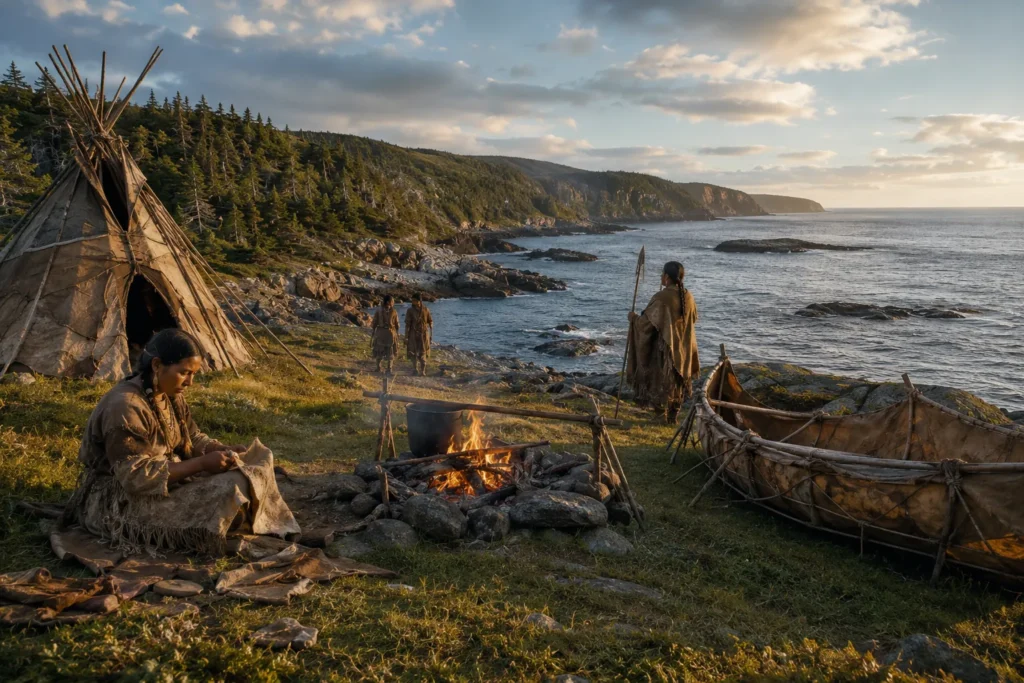
Understanding this earlier history is essential because it places Bonavista’s famous connection to John Cabot into proper context. Cabot did not “discover” an empty land. Rather, his 1497 expedition marked the beginning of sustained European awareness of Newfoundland’s extraordinary fishing grounds and ultimately transformed the relationship between Europe and North America. Historians continue to debate the precise location of Cabot’s first landfall because surviving contemporary records are remarkably sparse. If Cabot kept detailed journals or charts, they have long since disappeared, leaving historians to piece together his voyage from letters, maps, and second-hand accounts.
The Voyage That Changed the Atlantic
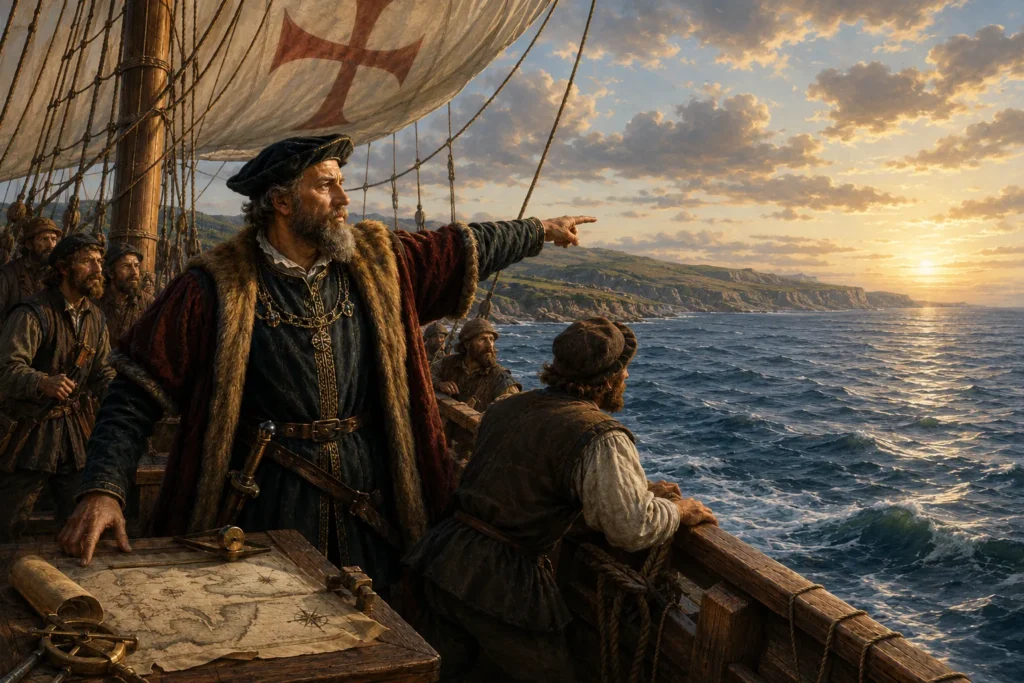
In the spring of 1497, John Cabot departed Bristol aboard the small ship Matthew under the sponsorship of King Henry VII of England. His mission was ambitious: to find a shorter western sea route to Asia that might rival the lucrative trade routes being explored by Spain and Portugal. Instead, his voyage altered the course of history in an entirely different way.
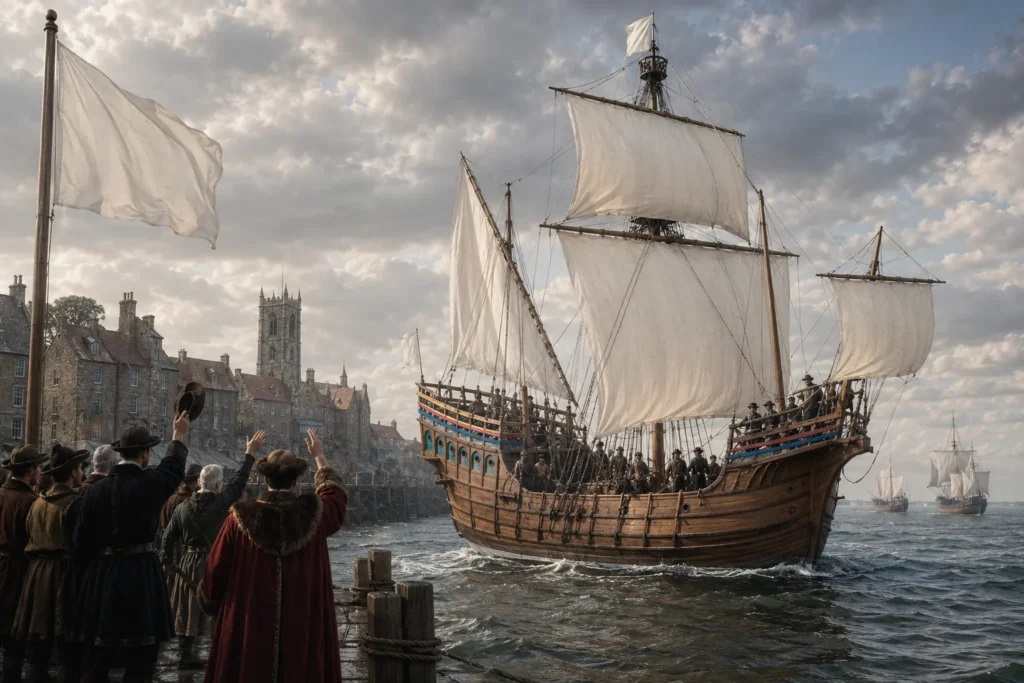
After weeks crossing the North Atlantic, Cabot sighted land on June 24, 1497. Exactly where that first landfall occurred remains uncertain. Cape Bonavista has long been honoured through local tradition as the site where Cabot first reached North America, and it has been officially commemorated as the traditional landfall. However, historians have also proposed other locations in Newfoundland, Labrador, Cape Breton, and elsewhere based upon differing interpretations of the surviving evidence. Parks Canada itself acknowledges that the historical sources do not permit an unequivocal identification of the exact landing site.
That uncertainty has done little to diminish Bonavista’s importance. For generations, local tradition has proudly associated the community with Cabot’s arrival, and visitors continue to gather at Cape Bonavista to reflect upon the voyage that helped reshape European understanding of the western Atlantic. A statue overlooking the sea commemorates the explorer, while a full-scale replica of the Matthew allows visitors to imagine the tiny vessel that crossed one of the world’s most formidable oceans.
“O Buona Vista”
Local tradition also preserves the story of Bonavista’s name.
According to one enduring legend, Cabot’s crew, after weeks of open ocean, finally sighted land and exclaimed “O Buona Vista!”—Italian for “Oh, beautiful view!” or “Oh, happy sight!” The phrase is said to have inspired the name Bonavista, meaning “good view.” While historians cannot confirm that these exact words were ever spoken, the story has become one of Newfoundland’s best-known historical traditions and remains deeply woven into the town’s identity. Whether literally true or not, it captures the emotion that any exhausted crew must have felt after finally seeing land rise from the Atlantic horizon.
From the headlands around Cape Bonavista, that first glimpse would indeed have been unforgettable. Towering cliffs rise above pounding surf, sea stacks stand like ancient sentinels offshore, and seabirds wheel endlessly over the crashing waves. Even today, the landscape possesses a wild grandeur that leaves a lasting impression on visitors arriving from inland highways, let alone sailors who had spent nearly two months crossing an uncertain ocean.
The Fish That Drew the World
Ironically, Cabot may not have realized that his greatest discovery was not land at all.
Reports returning to Europe spoke of astonishingly abundant cod stocks surrounding Newfoundland. Some accounts claimed fish were so plentiful they could almost be scooped from the sea in baskets. Whether exaggerated or not, those reports proved transformative. Within only a few years of Cabot’s voyage, fishing vessels from England, France, Portugal, Spain, and the Basque Country began crossing the Atlantic every spring to harvest the seemingly inexhaustible cod stocks that surrounded Newfoundland.
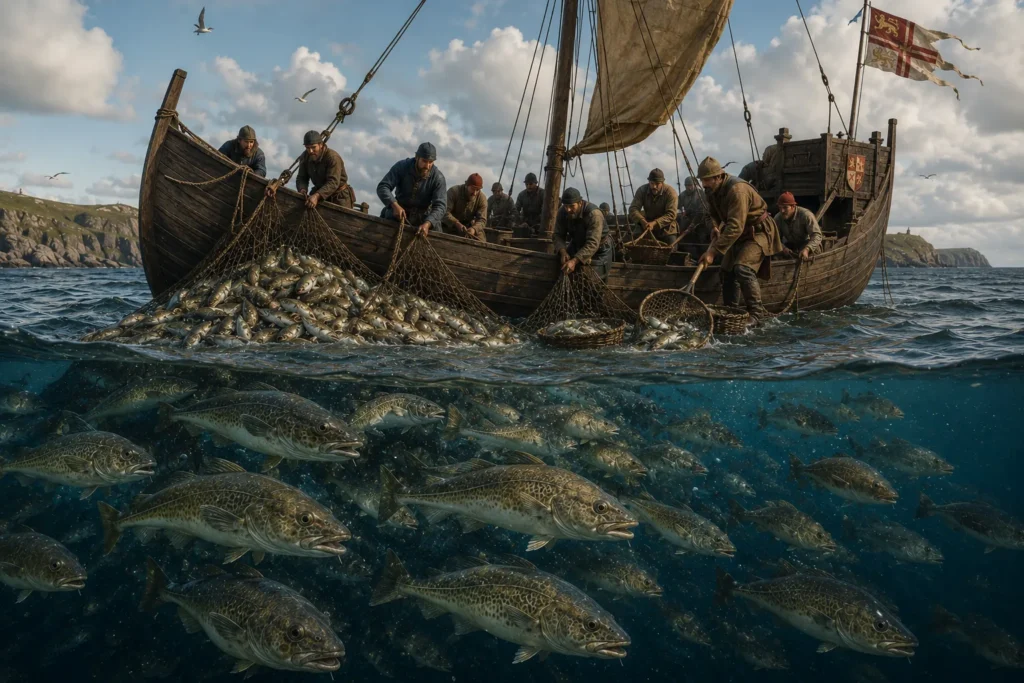
Bonavista’s location placed it at the centre of this emerging industry. Situated near some of the richest fishing grounds in the northwest Atlantic, the harbour offered shelter while nearby beaches and open spaces provided ideal locations for drying salt cod. Seasonal fishing stations gradually evolved into permanent settlements as merchants, planters, fishermen, and their families established roots along the coast. By the seventeenth century, Bonavista had become one of Newfoundland’s most active fishing communities, linking local waters with markets that stretched across Europe, the Caribbean, and South America.
The annual arrival of European fishing fleets transformed not only Newfoundland’s economy but also its cultural landscape. Languages from several nations echoed along the waterfront. Ships from Bristol anchored alongside French and Portuguese vessels. Merchants negotiated cargoes while coopers built barrels, blacksmiths repaired anchors, and crews prepared for another season on the Grand Banks. Bonavista had become far more than an isolated outport. It was an international crossroads connected to one of the world’s most valuable natural resources.
A Town Built on the Atlantic
As Bonavista matured into a permanent settlement, it developed into one of Newfoundland’s leading commercial centres.
Fishing families built homes overlooking the harbour while merchants established substantial premises to process, store, and export salt cod. Churches, schools, shops, and public buildings gradually followed, giving the growing community a sense of permanence uncommon in many early Newfoundland settlements. The rhythms of life remained inseparable from the sea. Every spring brought anticipation as fishing vessels prepared for another season, while autumn marked the departure of ships laden with dried cod destined for overseas markets.
Generations learned to read the weather, navigate dangerous coastal waters, and survive in one of the North Atlantic’s most demanding environments. Their resilience became part of Bonavista’s identity, shaping a culture rooted in hard work, cooperation, and a deep respect for the ocean that sustained the community—even as it sometimes claimed the lives of those who depended upon it.
Prosperity, Peril, and a Changing World
By the eighteenth and nineteenth centuries, Bonavista had grown into one of Newfoundland’s most important outports. The harbour bustled with activity each fishing season as schooners crowded the waterfront and flakes covered the hillsides with rows of drying cod. Merchants’ premises lined the shoreline, while cooperages, sail lofts, warehouses, and wharves formed the economic heart of the community. From dawn until dusk, nearly every aspect of daily life revolved around the Atlantic fishery.
The town also became a centre of governance and commerce on Newfoundland’s northeast coast. Local merchants built impressive homes that reflected the wealth generated by the cod trade, while churches of several denominations stood as landmarks overlooking the harbour. Schools, charitable organizations, and civic institutions flourished as Bonavista matured into one of the colony’s most influential communities. By the Victorian era, it was regarded as one of Newfoundland’s principal commercial centres outside St. John’s, its influence extending throughout Bonavista Bay and beyond.
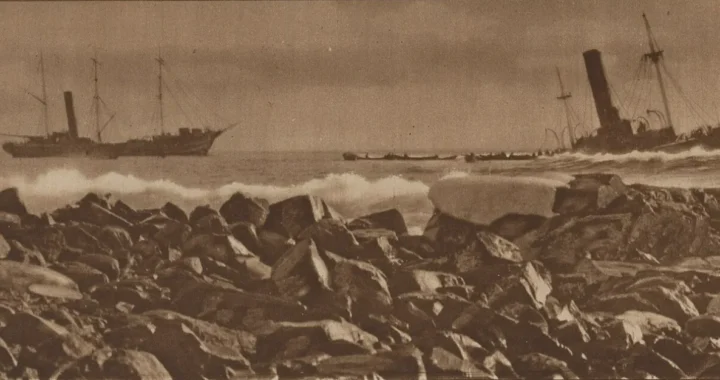
Life, however, was never easy. The same ocean that sustained Bonavista could become deadly without warning. Fierce winter storms battered the coastline, dense fog challenged even experienced captains, and shipwrecks were an ever-present danger. Fishing itself remained physically demanding and often hazardous. Families learned to live with uncertainty, knowing that every voyage carried risk. That resilience became woven into the character of the town and remains part of its identity today.
Cape Bonavista Lighthouse: A Beacon on the Edge of the Atlantic
Towering above the cliffs east of town stands one of Newfoundland and Labrador’s most recognizable landmarks.
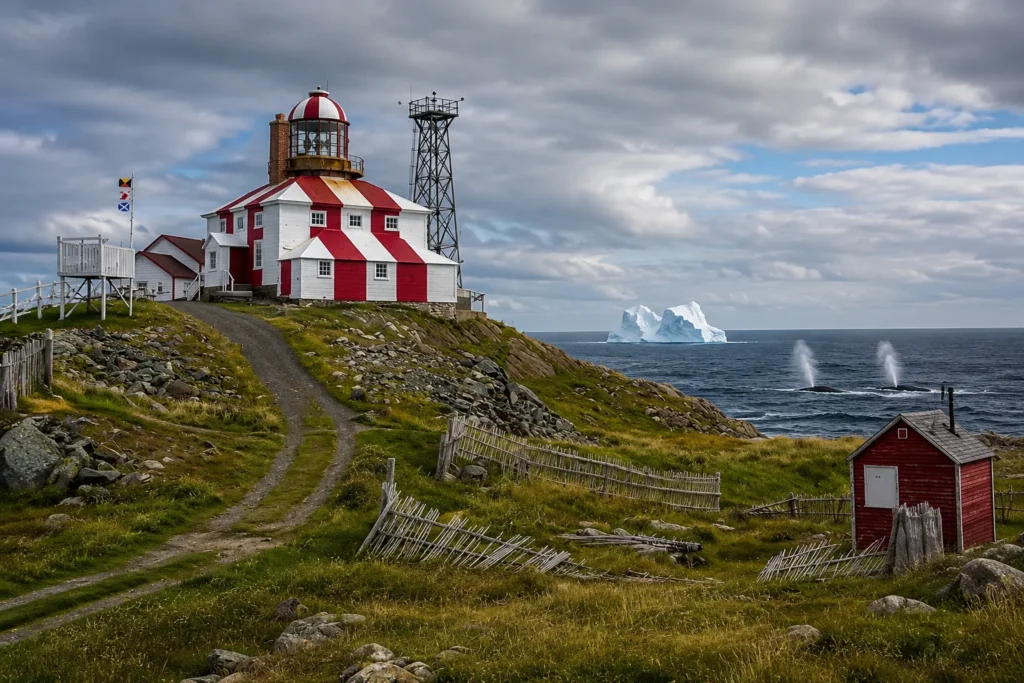
Completed in 1843, the Cape Bonavista Lighthouse guided ships safely along one of the busiest stretches of the Newfoundland coast during the height of the sailing era. Unlike many historic lighthouses that have undergone extensive modernization, Cape Bonavista retains its rare catoptric lighting system—a series of carefully positioned reflectors that magnified the light before the widespread adoption of Fresnel lenses. It is one of the few places in the world where visitors can still see this nineteenth-century technology demonstrated.
The view from the lighthouse explains why this location has become one of Newfoundland’s most photographed destinations. Towering cliffs plunge into the Atlantic, icebergs drift past during late spring and early summer, humpback whales often feed offshore, and thousands of seabirds nest along the surrounding coastline. Puffins, Newfoundland’s beloved provincial bird, are frequently spotted from the nearby viewing areas during the summer months, delighting photographers and wildlife enthusiasts alike.
For generations of mariners, however, the lighthouse represented far more than a scenic viewpoint. Its beam offered reassurance after days or weeks at sea, marking the approach to one of Newfoundland’s safest harbours. Countless sailors owed their safe arrival to the steady light that swept across the Atlantic night after night.
Preserving a Remarkable Past
Unlike many historic fishing communities that lost much of their traditional architecture during the twentieth century, Bonavista has worked diligently to preserve its heritage. Walking through the town today feels like stepping into a living museum where restored merchant premises, colourful saltbox houses, fishing stages, churches, and historic streetscapes continue to tell the story of generations who built their lives beside the sea.
One of the community’s most significant restoration projects is Ryan Premises National Historic Site. Established by the Ryan family, one of Newfoundland’s most successful merchant firms, the restored complex offers visitors a vivid glimpse into the operation of the traditional saltfish trade. Warehouses, offices, stores, and exhibits reveal how fish caught by local crews eventually found markets across Europe, South America, and the Caribbean. The site helps visitors appreciate that Bonavista’s prosperity was built not simply on catching fish, but on a vast international trading network that connected this small Newfoundland harbour with ports around the globe.
Historic churches, cemeteries, and family homes further enrich the community’s character. Every building seems to hold a story, whether of merchants who amassed fortunes, fishermen who faced the dangers of the Grand Banks, or families whose roots stretch back for centuries. Together, these places create one of the most complete collections of historic architecture in rural Newfoundland.
Bonavista Today
Although the commercial cod fishery no longer dominates life as it once did, Bonavista has found new strength by embracing its remarkable history and natural beauty.
Visitors now arrive from around the world to experience the dramatic coastline, watch whales and puffins, photograph icebergs, explore museums, and walk streets where five centuries of history remain visible. Local artisans, restaurants, galleries, accommodations, and cultural events have helped transform the town into one of Newfoundland and Labrador’s premier heritage tourism destinations while maintaining the warm hospitality for which outport communities are known.
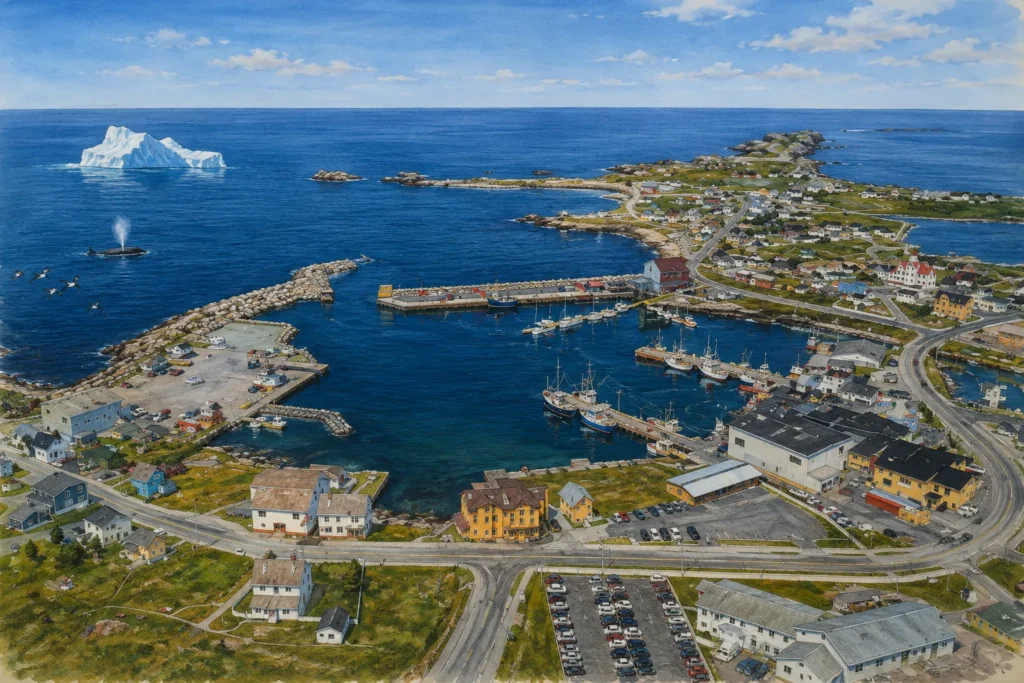
Yet despite its growing popularity, Bonavista has never lost its authenticity. Fishing boats still work the harbour. Residents greet visitors with genuine friendliness rather than rehearsed performances. The rhythms of the sea continue to shape everyday life, just as they have for generations. History here is not confined to museums—it remains part of the living community.
Standing on the cliffs at Cape Bonavista as waves crash against ancient rock, it becomes easy to understand why this place has inspired explorers, fishermen, artists, writers, and travellers for more than five hundred years. Whether or not John Cabot first stepped ashore here can never be proven with complete certainty. What is certain is that Bonavista occupies a unique place in the story of Newfoundland, Canada, and the Atlantic world.
Its landscape witnessed one of history’s most consequential voyages. Its harbour helped build an international fishery that transformed economies on both sides of the ocean. Its people weathered hardship with remarkable determination, preserving a heritage that continues to inspire new generations.
Few communities can claim such a remarkable legacy.
We’d Love to Hear From You
Have you visited Bonavista or stood on the cliffs at Cape Bonavista where history and legend meet? Do you have family roots in the area, memories of fishing from its harbour, or old photographs you’d like to share? We’d love to hear your stories in the comments below and celebrate the rich heritage of this remarkable Newfoundland community.
If you enjoyed this story, be sure to read more fascinating Newfoundland and Labrador stories here on ShareNL.ca.