How one songwriter transformed the stories, struggles, and spirit of Newfoundland and Labrador into music that still echoes around the world.
Long after the final note fades, some songs continue to live in the people who sing them. Across Newfoundland and Labrador, few artists have left a deeper imprint than Ron Hynes. His music wasn’t simply performed—it became woven into kitchen parties, community halls, ferry crossings, fishing stages, and family gatherings. His lyrics captured the hopes, hardships, humour, and resilience of ordinary Newfoundlanders with remarkable honesty.
Known affectionately as “The Man of a Thousand Songs,” Hynes spent more than four decades telling stories that reflected the province back to itself. While countless musicians have celebrated Newfoundland’s beauty, Ron Hynes possessed an uncommon gift: he could make listeners feel they already knew the people in his songs. They sounded like neighbours, relatives, and lifelong friends.
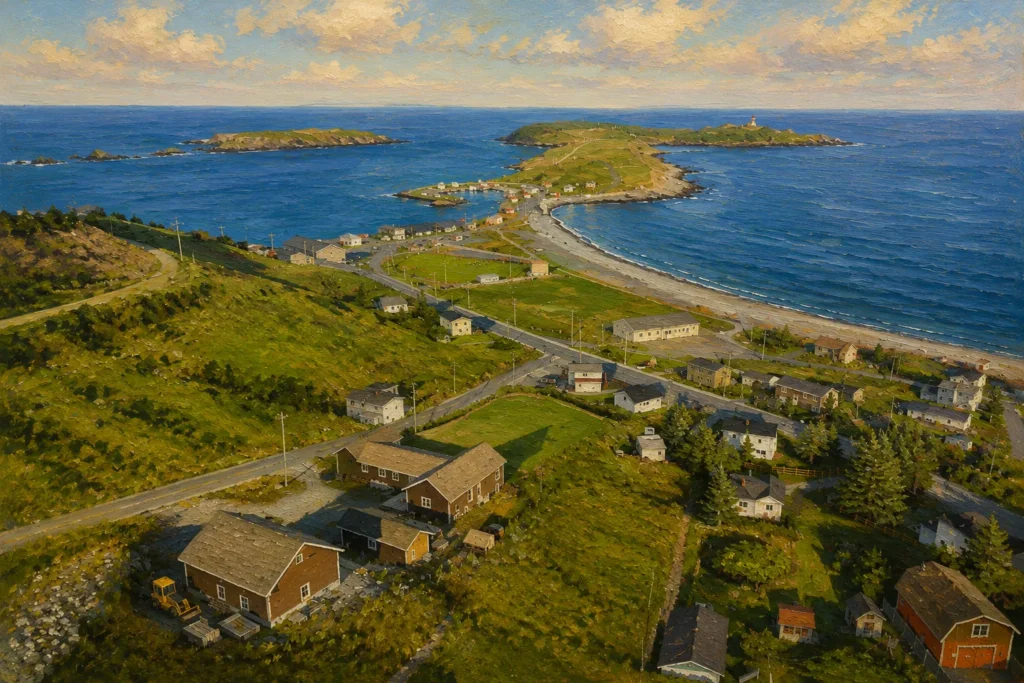
Born in St. John’s on December 7, 1950, and raised in the historic community of Ferryland on the Southern Shore, Hynes grew up surrounded by storytelling. Traditional Irish music, country records, local characters, and life in an outport community all became part of the creative foundation that would shape his remarkable career.
His breakthrough arrived early. In 1972, he released Discovery, widely recognized as the first album consisting entirely of original songs written and recorded by a Newfoundland artist. At a time when many local performers focused on traditional material, Hynes demonstrated that Newfoundland’s contemporary stories deserved a place alongside its centuries-old ballads.
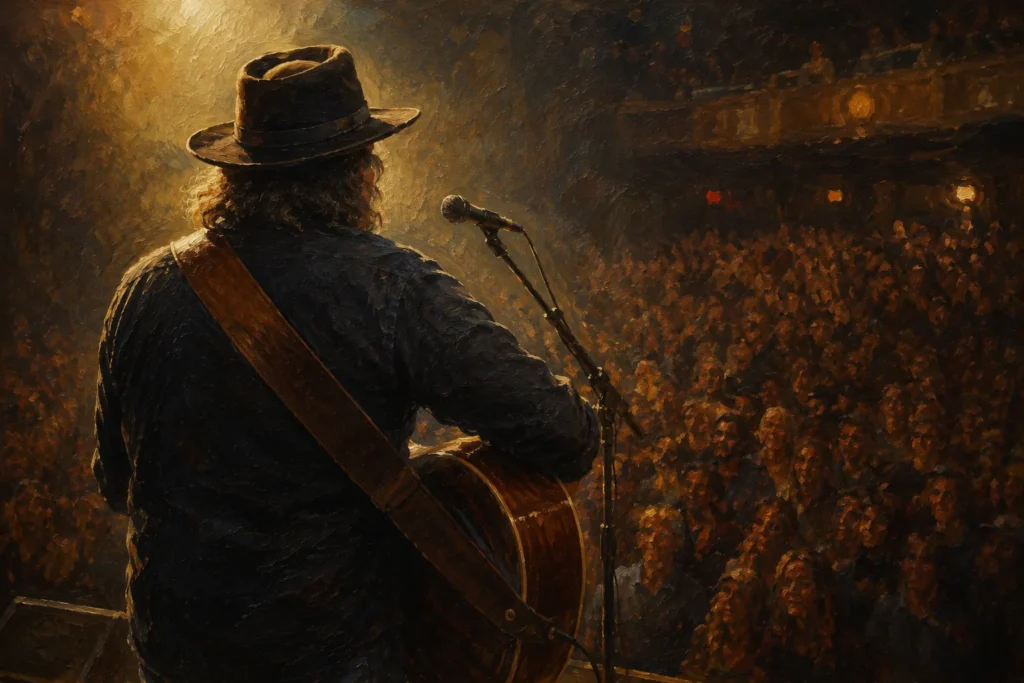
Throughout the 1970s, Hynes also worked with the influential Mummers Troupe before becoming a founding member of the beloved comedy and music ensemble The Wonderful Grand Band. Television audiences across the province came to know his distinctive voice, dry wit, and unmistakable stage presence, complete with his trademark broad-brimmed hat. Yet even amid the humour, songwriting remained at the heart of everything he did.
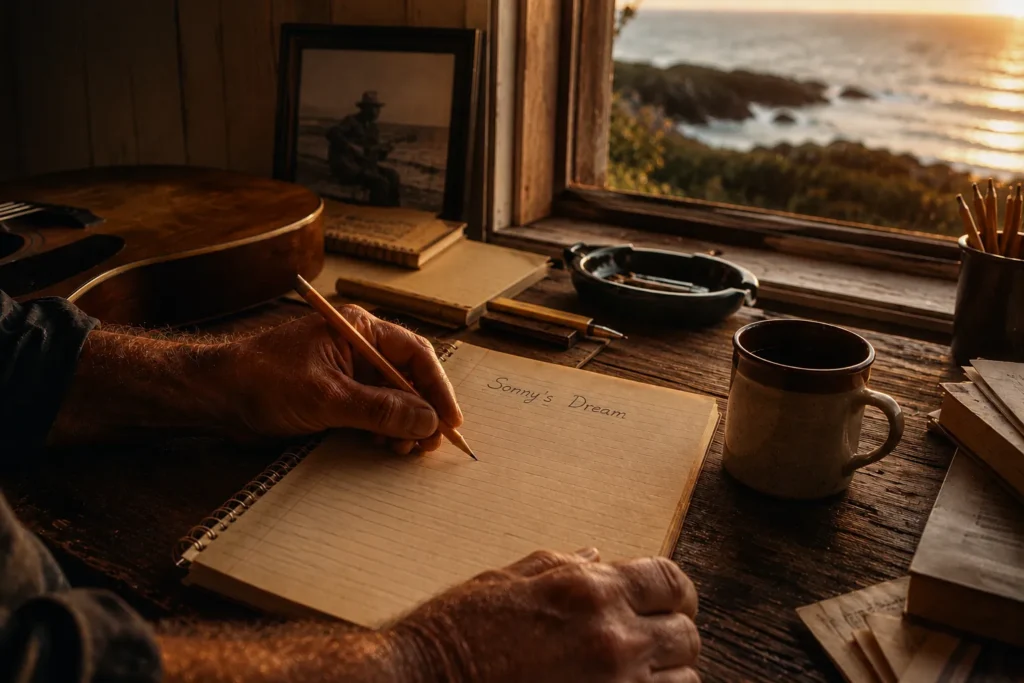
No song better illustrates his enduring legacy than “Sonny’s Dream.” Written in 1976, the song tells the story of a young man torn between responsibility at home and dreams of a different life elsewhere. Although deeply rooted in Newfoundland, its themes of family obligation, sacrifice, and longing proved universal. The song has since been recorded by more than 200 artists, including Emmylou Harris, Christy Moore, Stan Rogers, Great Big Sea, Mary Black, and Hayley Westenra, introducing Hynes’s songwriting to audiences around the world.
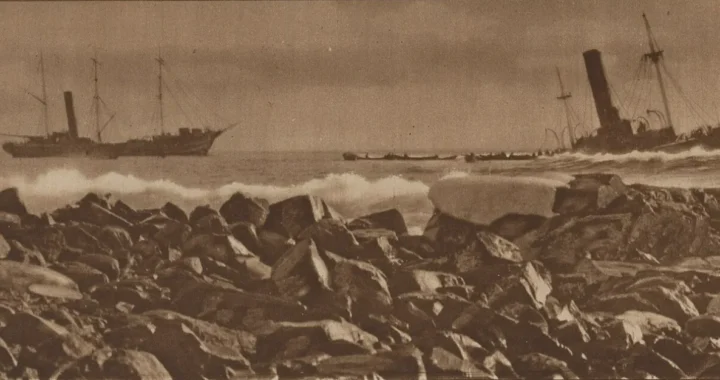
But Hynes was never interested in writing postcards. His Newfoundland was beautiful, certainly, but it was also complicated. Songs like Atlantic Blue, written following the tragic loss of the Ocean Ranger in 1982, captured collective grief with quiet dignity. St. John’s Waltz became one of the province’s most beloved musical portraits, expressing both affection for the capital city and the bittersweet reality that many Newfoundlanders eventually leave home in search of opportunity. Rather than romanticizing the province, Hynes embraced its contradictions, and listeners responded because they recognized the truth within his words.
His influence extended well beyond Newfoundland and Labrador. Over the years, Hynes earned multiple East Coast Music Awards, received a Genie Award for Best Original Song for The Final Breath from the film Secret Nation, and was awarded an honorary Doctor of Letters by Memorial University in recognition of his extraordinary contribution to the province’s cultural heritage. In 2020, he was posthumously inducted into the Canadian Songwriters Hall of Fame, an honour that acknowledged what Newfoundlanders had understood for decades: Ron Hynes was one of Canada’s greatest storytellers.
Like many gifted artists, however, Hynes’s life was not without hardship. He spoke openly through both interviews and his songwriting about struggles with addiction and personal loss. Rather than diminishing his work, those experiences gave it remarkable emotional depth. Songs such as Man of a Thousand Songs reveal an artist willing to examine his own flaws with uncommon honesty, creating music that resonated because it felt profoundly human.
Even after being diagnosed with throat cancer in 2012, Hynes continued performing whenever he could, determined to keep sharing the songs that had become inseparable from his identity. When he passed away on November 19, 2015, tributes poured in from across Canada and beyond. Musicians, political leaders, writers, and thousands of fans remembered not only his remarkable catalogue but also the generosity, humour, and authenticity that defined him.
Today, Ron Hynes’s music remains a living part of Newfoundland culture. His songs are still heard at concerts, festivals, family kitchens, and community gatherings. Young musicians continue to discover his work, while longtime fans find new meaning in familiar lyrics with every passing year. Few artists have managed to capture the emotional landscape of a place as completely as Hynes did. Through his songs, Newfoundland and Labrador found a voice that was unmistakably its own—one that continues to travel far beyond its shores.
Do you have a favourite Ron Hynes song or memory? We’d love to hear it. Share your favourite lyrics, concert experiences, photographs, or stories in the comments below and help celebrate one of Newfoundland and Labrador’s greatest songwriters.
If you enjoyed this story, be sure to read more fascinating Newfoundland and Labrador stories here on ShareNL.ca.