Where history, memory, and imagination meet above the waters of Placentia Bay
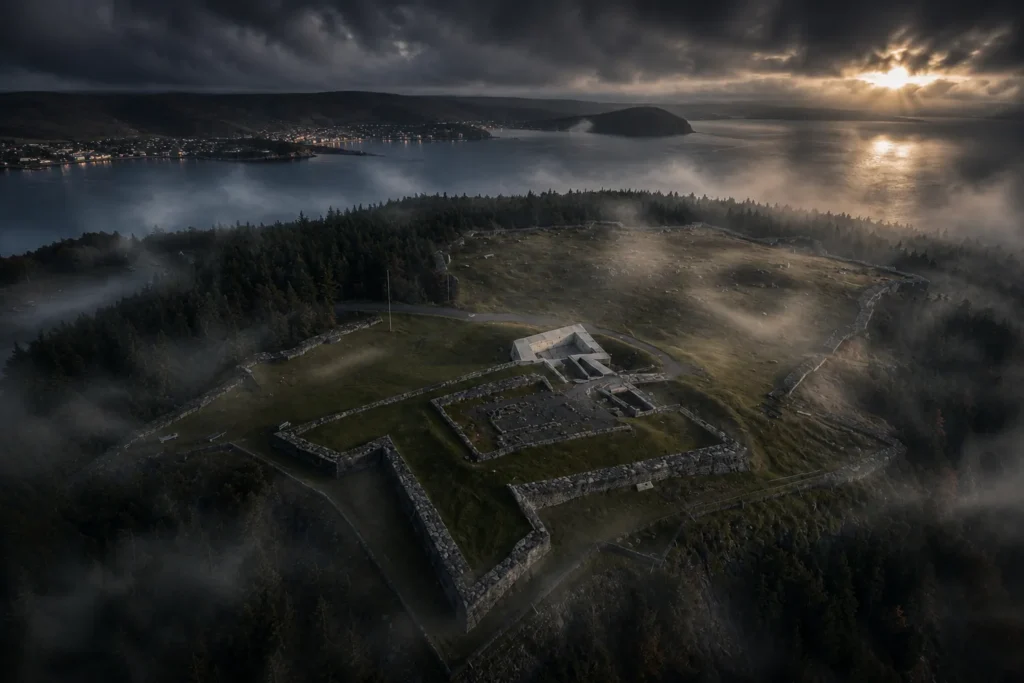
High above the sheltered harbour of Placentia, where seabirds ride the coastal winds and the waters of Placentia Bay stretch toward the open Atlantic, the weathered earthworks of Castle Hill stand in quiet silence. Today, visitors come for the sweeping views and centuries of history. Yet as the afternoon light begins to fade and sea fog drifts across the hillside, many discover that Castle Hill carries something else as well—a powerful sense that the past has never entirely left.
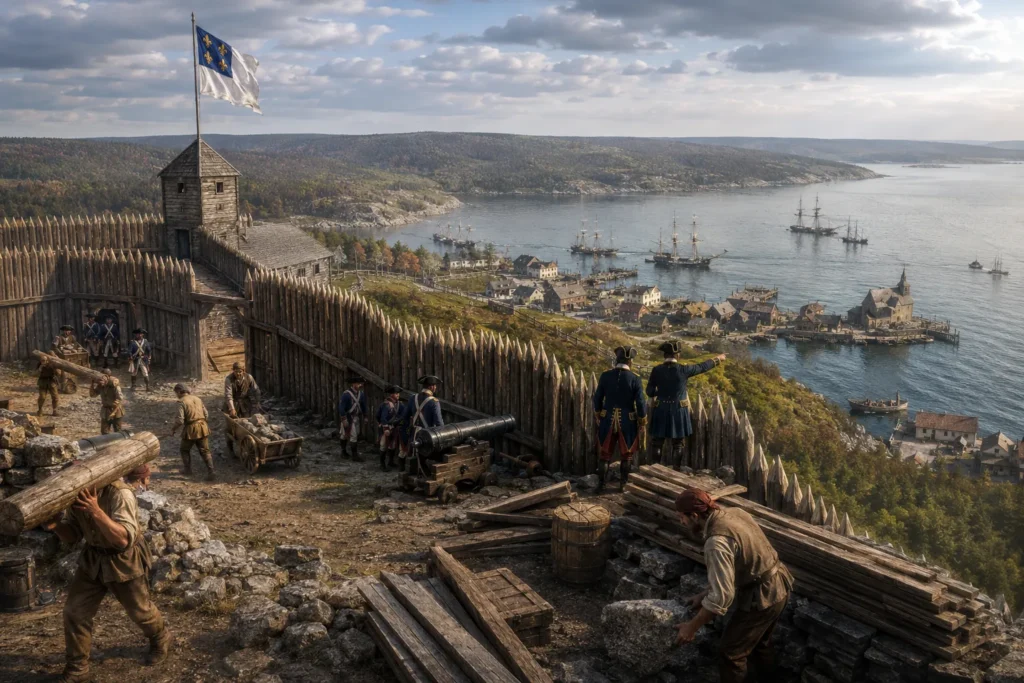
For more than three centuries, this commanding hill has overlooked one of Newfoundland’s most strategically important harbours. In 1693, the French began constructing Fort Royal atop the bluff. Completed around 1702, it became the elevated centrepiece of a larger defensive network protecting Plaisance, then the capital and principal military and administrative centre of France’s colony in Newfoundland. Together with nearby forts, batteries, and defensive works, Castle Hill helped safeguard a settlement whose prosperity depended upon the cod fishery and control of Placentia Bay.
Although built during an age of recurring conflict between France and Britain, Fort Royal was never captured in battle. Instead, following the Treaty of Utrecht in 1713, France ceded its Newfoundland settlements to Britain. The following year, almost all of Plaisance’s French inhabitants departed, most resettling on Île Royale near the future site of Louisbourg, where France established a new colonial centre.
British forces subsequently took possession of Placentia’s fortifications. While they continued to use Castle Hill as part of the harbour’s wider defensive network and constructed a blockhouse on the hill, military priorities gradually shifted toward other defensive positions closer to the settlement and waterfront. Over time, Fort Royal slowly deteriorated, and by the beginning of the nineteenth century much of the original French fortification had fallen into ruin. The British military presence at Placentia finally ended in 1811.
Today, the quiet earthworks and scattered stone foundations give only subtle hints of the remarkable military and colonial community that once depended upon these fortifications.
It is difficult to stand among the ruins without imagining the lives once lived here.
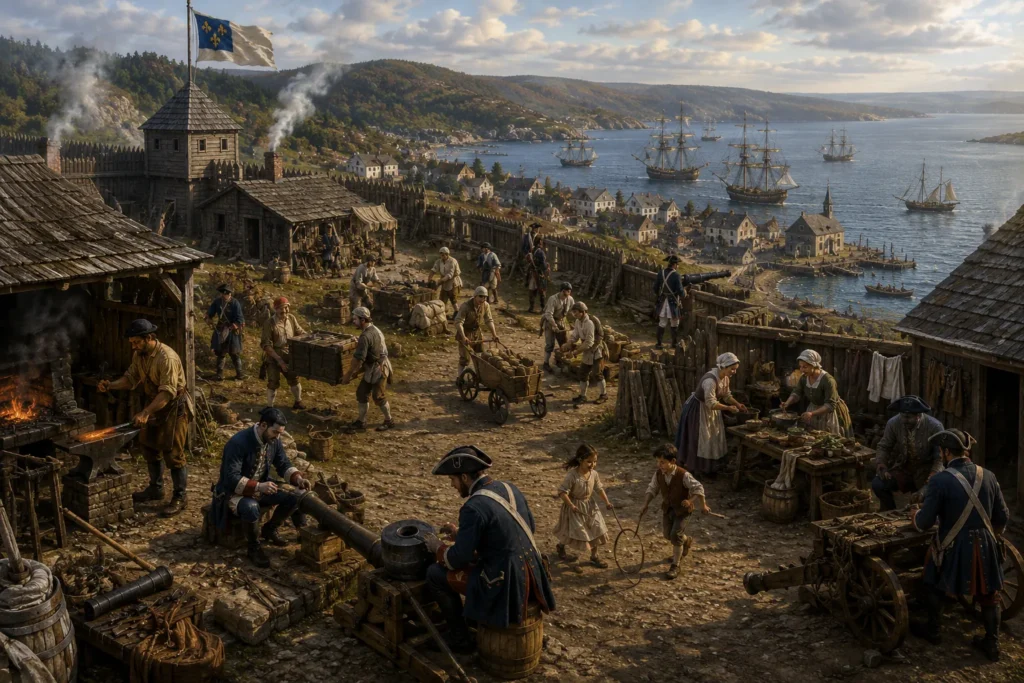
Soldiers endured long winters overlooking the harbour. Cannons guarded the narrow entrance below. Officers considered how best to defend the settlement, its harbour, and the valuable fishery that sustained it, while labourers hauled stone, timber, and supplies up the steep hillside. Below them, fishing vessels and merchant ships crossed the Atlantic, their fortunes often shaped by whichever empire controlled this strategically important harbour.
Archaeological investigations have uncovered military equipment, ceramics, glass, tools, buttons, pipe fragments, fishhooks, animal remains, and many other objects associated with daily life during both the French and British occupations. Together, these discoveries have allowed historians to reconstruct life inside one of Newfoundland’s most significant military settlements, revealing that behind the walls and cannons were ordinary people working, serving, raising families, and building lives far from Europe.
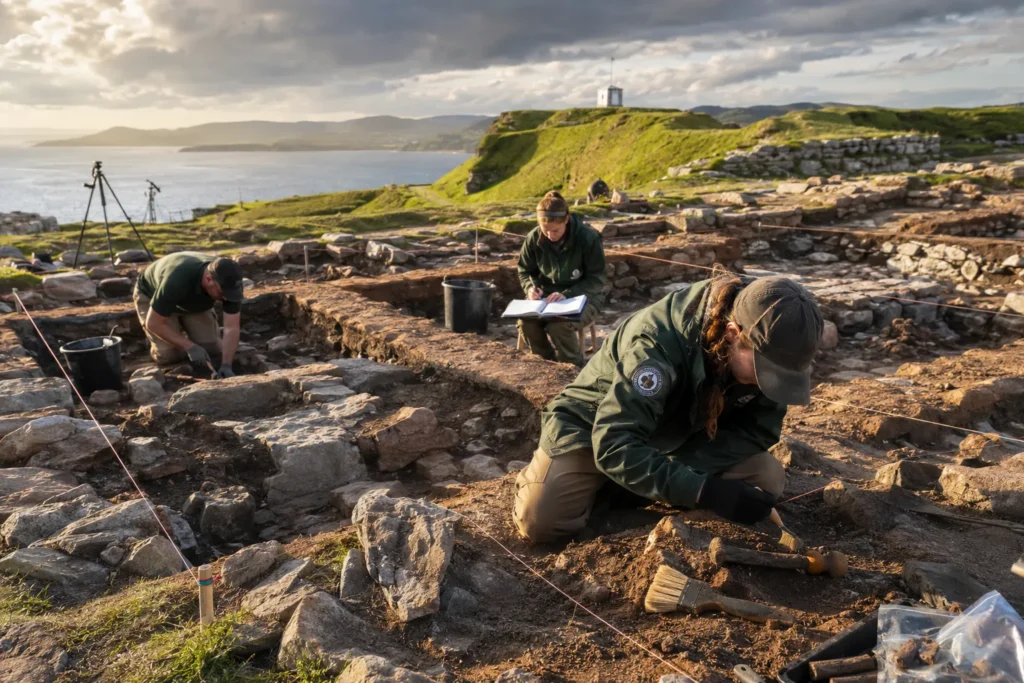
With so much history concentrated in one place, it is perhaps inevitable that Castle Hill inspires thoughts extending beyond military records and archaeological reports.
Unlike some historic sites in Newfoundland and Labrador, Castle Hill is not associated with a widely documented ghost legend, nor is there historical evidence that the site is haunted. Yet anyone walking among the old earthworks as sea fog drifts across the hillside can understand why places like this stir the imagination.
An empty pathway disappearing into mist may briefly suggest distant footsteps. A shifting shadow along an old embankment can momentarily resemble a solitary figure before revealing itself to be nothing more than waving grass. The wind sweeping across the open fortifications seems to carry echoes from another age. Such moments are not evidence of the supernatural. Rather, they remind us that historic landscapes possess a remarkable ability to make the past feel unexpectedly close.
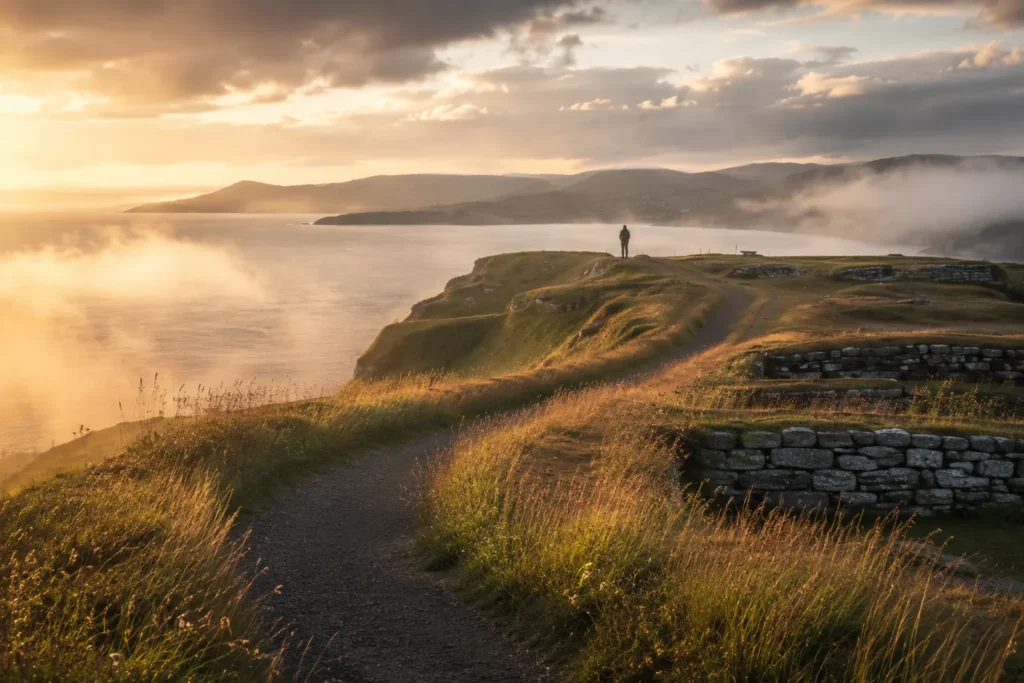
The setting itself contributes to that feeling.
Sea fog can sweep across Castle Hill with surprising speed, reducing the sprawling earthworks to faint silhouettes. Coastal winds whistle across the open hillside while gulls and other seabirds circle overhead. The panoramic views that draw visitors during daylight gradually soften beneath shifting light and mist, inviting quiet reflection rather than certainty.
Castle Hill’s documented history is dramatic enough without embellishment.
From the late seventeenth century into the British period, the hill formed an important part of the larger defensive system protecting first Plaisance and later Placentia. Its military role evolved as priorities changed, but throughout its history the struggle centred on far more than military conquest. It reflected competition for Newfoundland’s extraordinarily valuable cod fishery, the protection of Atlantic shipping, and influence across northeastern North America. The strategic importance of Placentia made Castle Hill a key position in an imperial rivalry that helped shape Newfoundland’s history.
As military priorities changed during the early nineteenth century, Britain’s military presence in Placentia came to an end. Nature gradually reclaimed the hillside, softening stone walls beneath grass and wildflowers while preserving the remarkable earthworks that visitors continue to explore today.
Today, Parks Canada protects Castle Hill National Historic Site as one of Newfoundland and Labrador’s most significant historic landscapes. Its preserved earthworks, archaeological remains, and commanding views offer visitors an opportunity to experience a place where French and British colonial history intersected in remarkable fashion.
Whether visitors arrive to explore military history, photograph the spectacular scenery, or simply stand above the harbour where so much unfolded, Castle Hill leaves a lasting impression. Some leave thinking about rival empires and colonial ambitions. Others remember the quiet, the wind, and the feeling that the landscape itself seems to hold the memory of those who once stood watch here.
Perhaps that is where the true spirits of Castle Hill are found.
Not ghosts in the traditional sense, but echoes of determination, hardship, and human lives woven into the landscape. They remind us that history is more than dates carved into stone or battles recorded in official documents. More than three centuries after the first stones were laid, Castle Hill continues to remind us that Newfoundland’s history was shaped not only by explorers and governors, but by ordinary soldiers, labourers, fishermen, and families who built lives on this windswept coastline. Every visitor who walks these earthworks becomes part of that continuing story, ensuring that the memory of Castle Hill endures for generations to come.
Have you ever visited Castle Hill? What struck you most—the incredible views, the rich history, or the quiet atmosphere that seems to connect the present with centuries past? We’d love to see your photographs, hear your memories, or read any family stories you have about this remarkable National Historic Site.