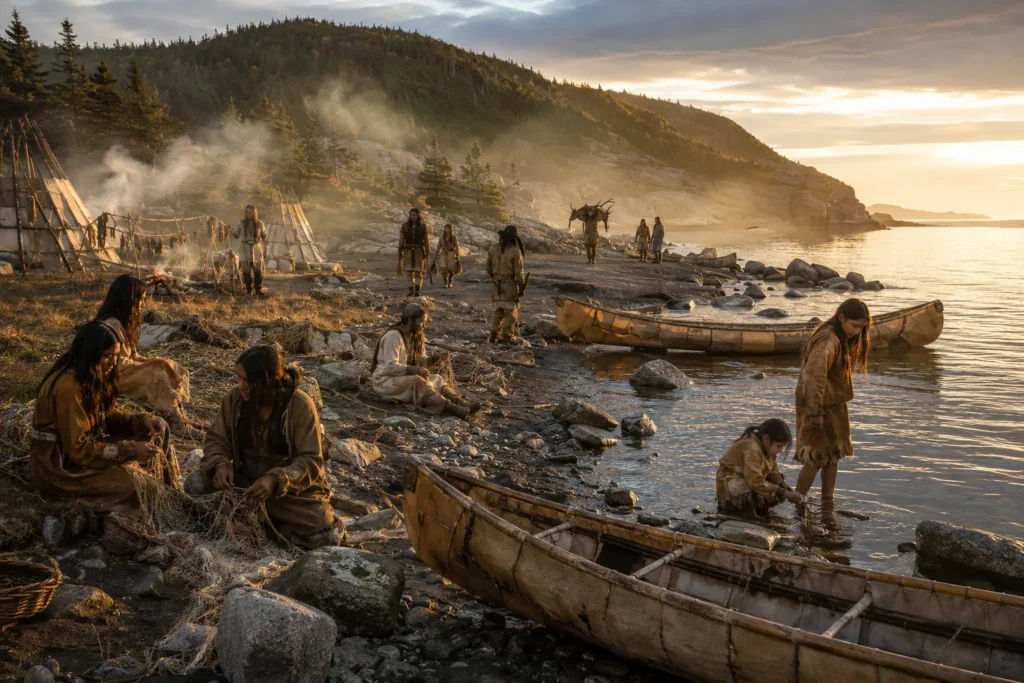
For thousands of years before Europeans reached these shores, generations of Indigenous peoples shaped the lands, waters, and traditions of what is now Newfoundland and Labrador.
The story of Newfoundland and Labrador did not begin with John Cabot, Viking explorers, or European fishermen. It began thousands of years earlier, when Indigenous peoples adapted to one of North America’s most rugged environments and built cultures deeply connected to the sea, the rivers, the forests, and the changing seasons.
Today, evidence of these histories survives in archaeological sites, ancient tools, settlement remains, oral traditions, and the knowledge preserved by Indigenous communities across the province. Together, they reveal a remarkable human story—one of resilience, innovation, and an enduring relationship with a landscape that has sustained people for millennia.
Understanding Newfoundland and Labrador means understanding the people who were here first.
Archaeological evidence currently traces human presence in Labrador back approximately 9,000 years, not long after the retreat of the last glaciers at the end of the Ice Age. Evidence of settlement on the island of Newfoundland appears several thousand years later. Across the millennia, culturally distinct peoples occupied the region at different times, each adapting to changing environments while leaving lasting marks on the province’s history.
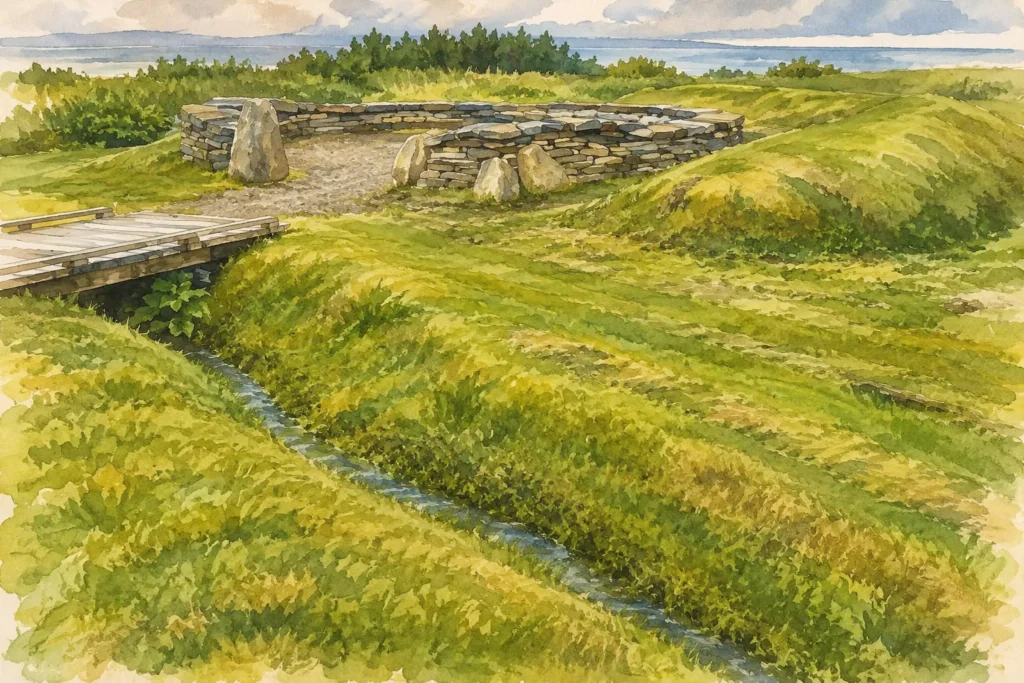
Among the earliest were the Maritime Archaic peoples, renowned for their remarkable adaptation to life along the Atlantic coast. Skilled hunters and fishers, they travelled coastal waters in watercraft whose exact design remains unknown, harvested seals and other marine resources, and established seasonal camps throughout Labrador and parts of Newfoundland. One of the most extraordinary discoveries associated with these people lies at Port au Choix on Newfoundland’s Great Northern Peninsula, where an ancient cemetery used approximately 4,000 to 5,000 years ago contained finely crafted tools, ornaments, and abundant red ochre. The repeated use of ochre suggests ceremonial or symbolic importance, although its precise meaning remains unknown. These remarkable burials have provided archaeologists with an unusually intimate glimpse into a sophisticated culture whose beliefs can only be partially understood through the archaeological record.
Thousands of years later, new peoples arrived from the Arctic.
Archaeologists traditionally refer to these culturally distinct peoples as the Palaeoeskimo cultures, including the Groswater and later Dorset peoples. Although they are not automatically considered direct ancestors of today’s Labrador Inuit, they developed an extraordinary mastery of northern coastal living. Their communities relied heavily on seals and other marine resources, constructing dwellings near productive hunting grounds. At sites such as Port au Choix, archaeologists have uncovered house depressions, stone dwelling features, soapstone lamps, finely crafted tools, and evidence that people returned repeatedly to rich hunting areas over many generations. Their arrival marked another important chapter in Newfoundland and Labrador’s ancient history, demonstrating how different peoples continually adapted to changing climates and coastlines.
Roughly one thousand years ago, the ancestors of the people later known as the Beothuk had become firmly established across much of the island of Newfoundland. Archaeologists commonly associate these ancestors with what is known as the Little Passage tradition.
Perhaps no Indigenous people are more closely associated with Newfoundland’s history than the Beothuk. They travelled seasonally through coastal, river, and interior landscapes, hunting caribou, catching salmon, harvesting seals, gathering birds and eggs, and making use of the island’s abundant natural resources. They are especially remembered for applying red ochre to their bodies, clothing, tools, and canoes, a practice that almost certainly held deep cultural and spiritual significance. Early Europeans applied an outdated name based on this custom, but today the people are respectfully known simply as the Beothuk.
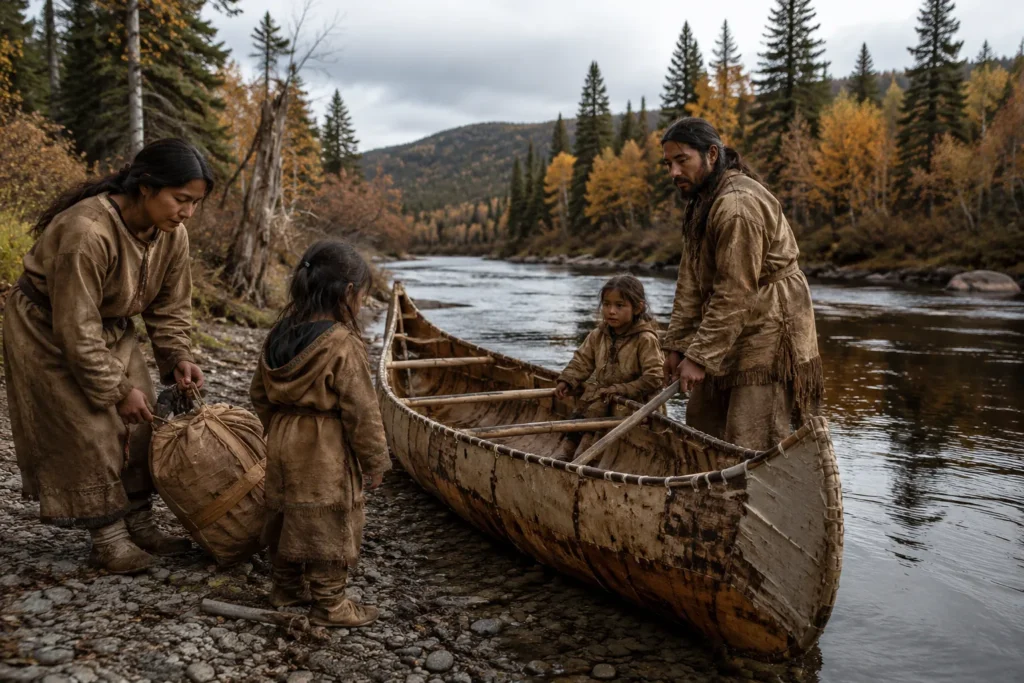
Relations between the Beothuk and Europeans were limited and often marked by mistrust and conflict. As English fishing settlements expanded during the seventeenth and eighteenth centuries, access to important coastal hunting grounds and food resources became increasingly restricted. Displacement, hunger, violence, isolation, and introduced diseases combined to devastate an already small population. Historians emphasize that no single cause explains the disappearance of the Beothuk as a distinct cultural community. Rather, it resulted from a complex series of interconnected events that unfolded over many generations.
In 1829, Shanawdithit—widely recognized as the last known member of the Beothuk cultural community—died in St. John’s. During her final years, she created remarkable drawings and shared invaluable knowledge that William Eppes Cormack and others carefully recorded. Together, these materials remain among the most important surviving records of Beothuk history, even as historians recognize that they were preserved through the interpretations of those who documented them.
While the Beothuk lived on the island of Newfoundland, Labrador remained home to other Indigenous peoples whose histories continue into the present day.
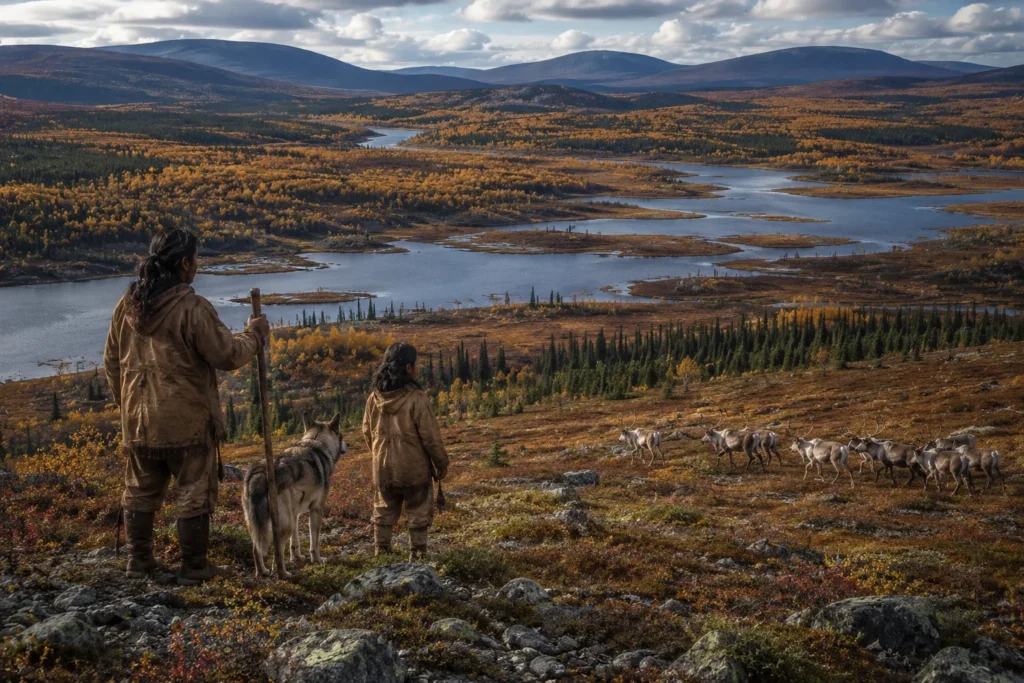
The Innu understand Nitassinan—their traditional homeland stretching across much of Labrador and eastern Quebec—as their homeland since time immemorial. Their history is preserved not only through archaeology but also through oral tradition, language, and generations of knowledge passed from one family to another. Skilled hunters, fishers, and travelers, the Innu developed an intimate understanding of Labrador’s rivers, forests, wildlife, and especially the great caribou herds that shaped many aspects of their seasonal way of life.
Beginning several centuries after the Norse period, the Thule ancestors of today’s Labrador Inuit expanded into northern Labrador. Travelling by kayak and umiak, hunting seals and other marine mammals, catching fish, and navigating sea ice with remarkable skill, they established thriving coastal communities whose rich maritime culture continues today. Their descendants now form the Inuit communities of Nunatsiavut, where language, traditions, self-government, and cultural knowledge remain central to community life.
Farther south, the people represented by the NunatuKavut Community Council identify as NunatuKavut Inuit, or Southern Inuit, tracing their distinct cultural identity through generations of life along Labrador’s southern coast and interior.
The Mi’kmaq also became an important part of Newfoundland’s Indigenous story. Historical records document Mi’kmaq travel between Cape Breton and Newfoundland by the seventeenth century, while Mi’kmaq oral traditions describe much deeper connections with the island. Many historians believe permanent year-round communities became more visible in colonial records during the eighteenth century. Today, Mi’kmaw communities remain an integral part of Newfoundland and Labrador’s cultural landscape, with places such as Miawpukek First Nation at Conne River continuing to strengthen language, governance, culture, and community life for future generations.
Modern archaeology continues to reshape our understanding of Newfoundland and Labrador’s earliest history. Every new excavation, scientific study, and carefully documented discovery adds another piece to a story stretching back thousands of years. At the same time, Indigenous knowledge and oral traditions provide perspectives that archaeology alone cannot fully capture, reminding us that history lives not only in the ground but also within communities that continue to share, protect, and celebrate their heritage.
Today, the First Peoples of Newfoundland and Labrador are not simply figures from the distant past. The Innu, Inuit, Mi’kmaq, and NunatuKavut Inuit continue to shape the province through their cultures, languages, governance, art, stewardship of the land, and vibrant communities. Their histories stretch back far beyond written records, forming the earliest chapters of a story that continues to unfold.
Do you have stories to share about Newfoundland and Labrador’s Indigenous history, or memories of visiting interpreted heritage sites such as Port au Choix? We’d love to hear your experiences in the comments below.
If you enjoyed this story, explore more fascinating history, culture, and heritage from across Newfoundland and Labrador here on ShareNL.ca.