
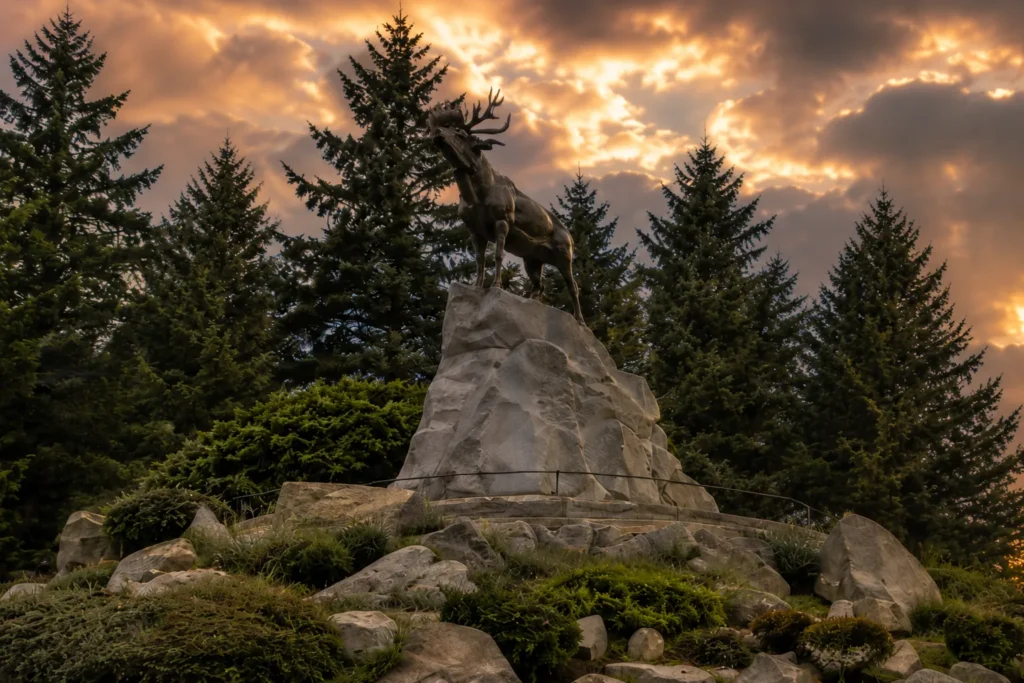
More than a century after one of the darkest days in Newfoundland’s history, a lone bronze caribou still watches over the fields where courage met catastrophe.
On a quiet hillside in northern France, the wind moves gently through tall grass that has long reclaimed the scars of war. Songbirds fill the air where artillery once shook the earth, and sheep now graze across fields that were once torn apart by shellfire. Visitors often pause in silence before a towering bronze caribou, its head held high as it gazes across the landscape. It is a peaceful place today, but beneath that calm lies one of the most heartbreaking chapters in Newfoundland and Labrador’s story.
For generations of Newfoundlanders and Labradorians, Beaumont-Hamel is far more than the name of a battlefield. It is a place where sacrifice became woven into the province’s identity, where countless families were forever changed, and where the memory of extraordinary courage continues to shape each Memorial Day.
When the First World War erupted in 1914, Newfoundland was not yet part of Canada. As a self-governing Dominion within the British Empire, it answered Britain’s call to arms with remarkable determination. Young men from isolated fishing villages, coastal communities, mining towns, and growing settlements volunteered in large numbers, eager to serve what they believed was a noble cause. Many had never travelled farther than the nearest outport. Before long, they found themselves crossing the Atlantic toward a conflict unlike anything the world had ever seen.
Those volunteers became part of the Royal Newfoundland Regiment, whose members would earn admiration for their discipline, resilience, and courage. After serving in the disastrous Gallipoli campaign, the regiment arrived on the Western Front, where an even greater ordeal awaited them. By the summer of 1916, Allied commanders had launched a massive offensive along the River Somme, hoping to break through heavily fortified German positions after days of relentless bombardment.
The attack at Beaumont-Hamel was intended to be one part of that enormous offensive. Military planners believed the artillery had destroyed enemy defences and cut through the tangled belts of barbed wire protecting the German trenches. Instead, many of those positions remained largely intact. Deep underground shelters had protected defending troops, while machine-gun emplacements waited for the advancing soldiers.
On the morning of July 1, confusion spread across the battlefield almost immediately. Earlier assaults had failed, leaving the ground strewn with casualties and making movement through the communication trenches nearly impossible. When the Royal Newfoundland Regiment received its orders, the men were forced to advance across open ground, fully exposed to enemy fire.
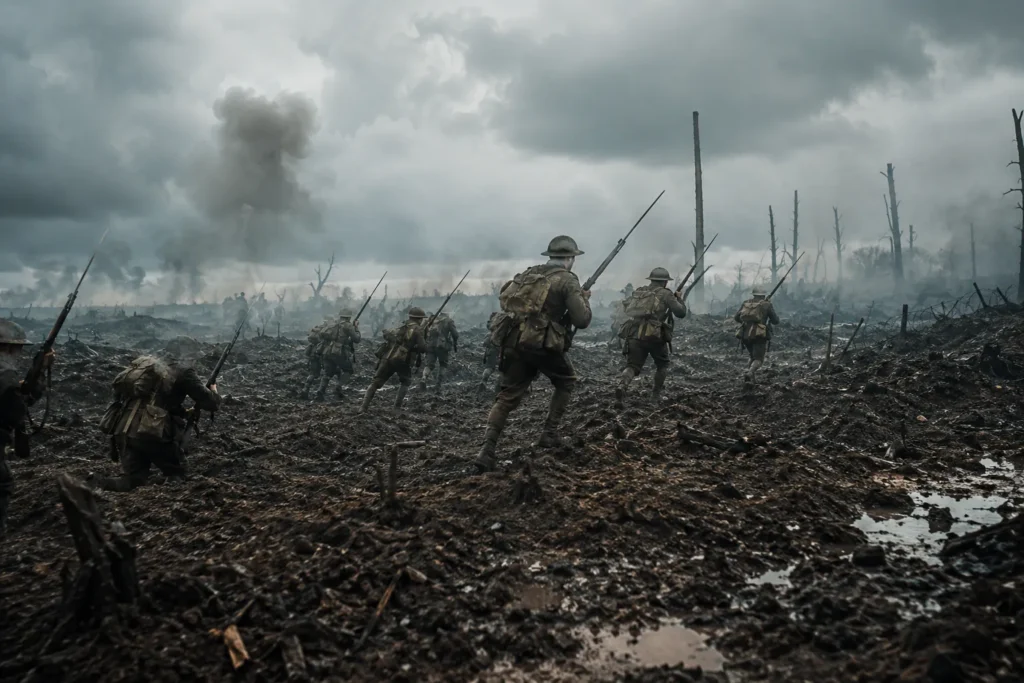
Witnesses later described the advance as disciplined and determined. Burdened by heavy packs and equipment, the soldiers climbed from their trenches and moved forward in carefully ordered lines. There was little cover to protect them. As they crossed the gentle slope toward the German positions, machine guns swept across No Man’s Land with devastating effect.
Many never reached the enemy wire.
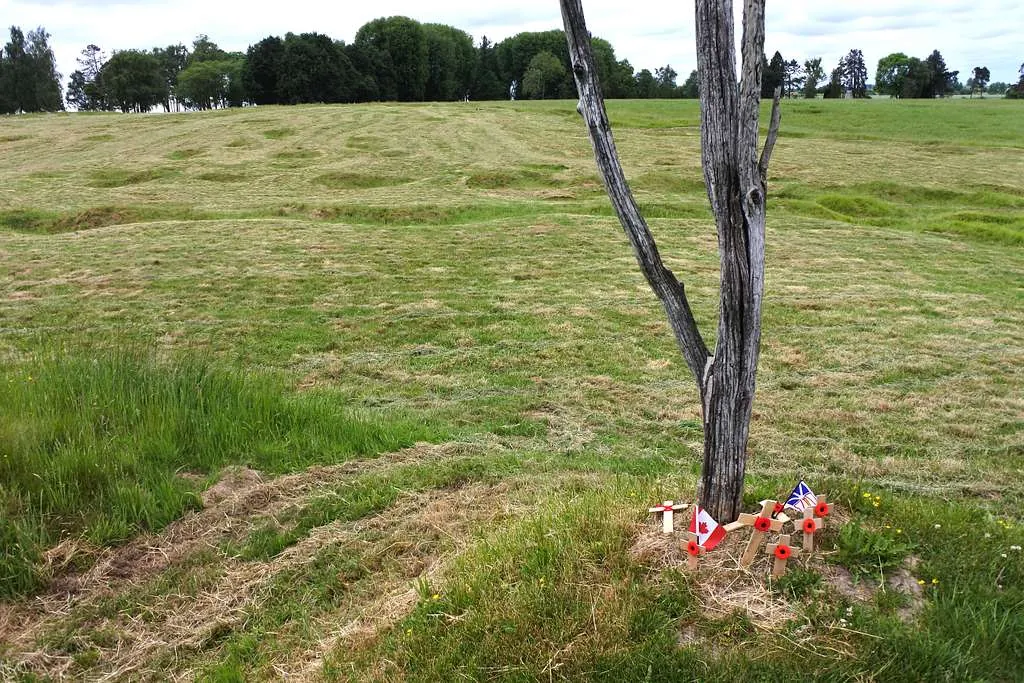
Others fell near a solitary tree that would become forever known as the Danger Tree, one of the battlefield’s most enduring landmarks. Within thirty minutes, the attack had collapsed. By the following day, only a small fraction of the regiment remained available for duty. The losses were staggering, representing one of the most devastating single-day tragedies ever experienced by Newfoundland.
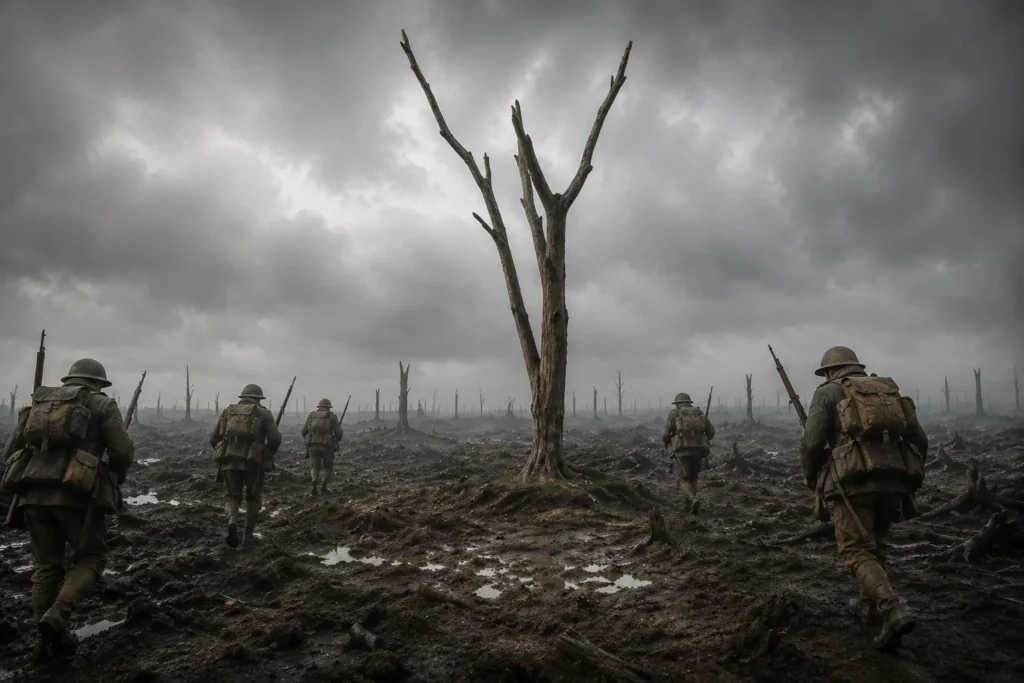
The impact was felt thousands of kilometres away across the island and Labrador. News travelled slowly, but when casualty lists finally arrived, grief spread from community to community. In small fishing villages where nearly every family knew one another, the loss of several young men could alter the fabric of an entire community. Boats that once put to sea with full crews returned with empty places. Parents mourned sons. Children grew up without fathers. Sweethearts waited for letters that would never come.
Unlike larger nations that could draw upon vast populations, Newfoundland’s losses were deeply personal. Almost everyone knew someone who had enlisted. The tragedy touched communities from the Northern Peninsula to the Burin Peninsula, from Conception Bay to the rugged coast of Labrador. Even today, family histories throughout the province continue to carry the names of those who served, those who returned, and those who never came home.
Out of unimaginable sorrow grew an enduring tradition of remembrance. In Newfoundland, July 1 is not only a day of celebration but also a day of reflection. Before Canada Day festivities begin, ceremonies honour the soldiers who fought at Beaumont-Hamel and the many Newfoundlanders who served during the First World War. The solemn observance serves as a reminder that behind every name engraved on a memorial was a son, a brother, a friend, or a neighbour whose absence was felt for generations.
Nearly a decade after the battle, Newfoundland ensured that the place itself would never be forgotten. The government acquired much of the battlefield and established what is now the Beaumont-Hamel Newfoundland Memorial, preserving the landscape much as it appeared in 1916. Original trench lines still cut across the hillsides, shell craters remain visible, and visitors can walk the same ground crossed by the Royal Newfoundland Regiment on that fateful July morning.
Standing at the highest point of the memorial is the bronze caribou, the enduring symbol of the regiment. Cast atop a mound of Newfoundland granite, it faces the former German lines with quiet determination. More than a monument, it has become a symbol of remembrance, resilience, and the enduring bond between Newfoundland and those who sacrificed everything so far from home.
For many visitors, the most powerful part of Beaumont-Hamel is not found on a plaque or in a museum display. It is the landscape itself. The battlefield remains one of the best-preserved First World War sites in Europe, allowing people to stand where history unfolded and gain a deeper appreciation for the impossible conditions faced by the young soldiers. The distance across No Man’s Land, the shallow depressions of the trenches, and the commanding view from the German positions all reveal how daunting the attack truly was.
The bronze caribou has become one of Newfoundland and Labrador’s most recognizable symbols of remembrance. It is one of several caribou monuments erected by the people of Newfoundland at locations where the Royal Newfoundland Regiment fought during the First World War, but none carries the emotional weight of Beaumont-Hamel. Looking across the quiet countryside today, it is difficult to imagine the deafening roar of artillery, the smoke that blanketed the fields, and the courage required to continue moving forward in the face of overwhelming danger.
Yet Beaumont-Hamel is not remembered solely because of tragedy. It is remembered because of the character displayed by those who served. The men of the Royal Newfoundland Regiment came from every corner of the Dominion—fishermen, loggers, clerks, teachers, labourers, and students. They represented communities large and small, united by a willingness to serve something greater than themselves. Their actions earned the lasting respect of fellow soldiers and secured a permanent place in Newfoundland and Labrador’s history.
Today, visitors from around the world walk the preserved battlefield, while descendants continue to trace family connections to those who fought there. Schoolchildren across Newfoundland and Labrador still learn the story of Beaumont-Hamel, not simply as a military engagement but as a defining moment that shaped the province’s identity. Every Memorial Day, wreaths are laid, flags are lowered, and moments of silence remind new generations that freedom has always come at a cost.
More than a century has passed since that terrible morning in France, but the lessons of Beaumont-Hamel remain as meaningful as ever. They remind us of the human cost of war, the strength of community in times of grief, and the importance of preserving the stories that define who we are. As long as the bronze caribou continues its silent watch over those peaceful fields, the sacrifice of Newfoundland’s soldiers will never fade into history.
Have you had the opportunity to visit Beaumont-Hamel, or does your family have a connection to the Royal Newfoundland Regiment? We’d love to hear your memories, see your photographs, or learn about the relatives whose stories have been passed down through generations. Share them with us in the comments below.
If you enjoyed this story, be sure to read more fascinating Newfoundland and Labrador stories here on ShareNL.ca.

Great article.
Thank you!