One man’s extraordinary trek across Newfoundland became far more than an expedition—it became a race against time to reach a people already disappearing.
On a cool September morning in 1822, a young Newfoundlander stepped into the wilderness carrying little more than determination, scientific curiosity, and hope. Before him stretched hundreds of kilometres of forests, rivers, bogs, and mountains that few Europeans had ever crossed. Yet William Eppes Cormack was searching for something far more important than a route across the island.
He hoped to find the Beothuk.
Today, Cormack is remembered as the first European to complete an overland crossing of Newfoundland’s rugged interior. But his greatest legacy may not be the remarkable journey itself. Instead, it lies in his determined, if ultimately unsuccessful, efforts to establish peaceful contact with the last surviving members of the Beothuk people before they disappeared forever.
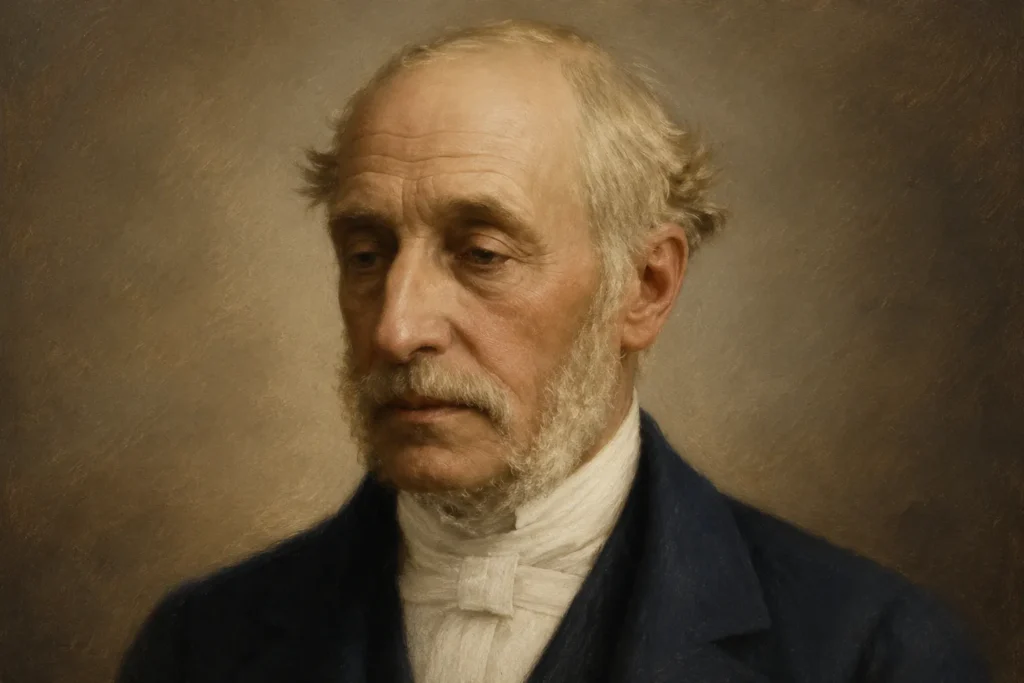
Born in St. John’s in 1796 to Scottish parents, Cormack received an excellent education in Scotland, studying at the University of Edinburgh during an era when science, natural history, and exploration flourished. When he returned to Newfoundland in 1822, he viewed the island differently than many of his contemporaries. Rather than seeing an untamed wilderness, he saw a landscape waiting to be understood. More importantly, he recognized that an Indigenous people who had called Newfoundland home for centuries were nearing catastrophe. Historical records already suggested that disease, displacement from coastal hunting grounds, violence, and starvation had devastated the Beothuk population over generations.
Cormack believed there was still time.
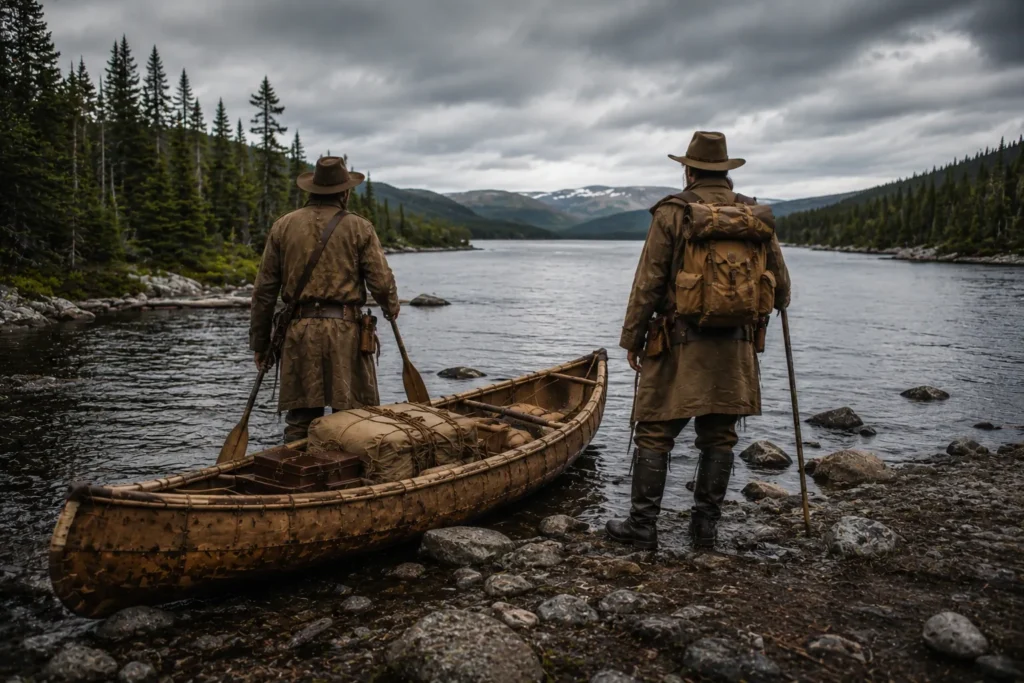
On September 5, 1822, he departed Smith Sound in Trinity Bay with a skilled Mi’kmaw guide, Joseph Sylvester—often known as Sylvester Joe. Together they ventured into country that was largely unmapped by Europeans, travelling through dense forests, across countless rivers, and over difficult highlands. Their route covered nearly the full width of Newfoundland, ending at St. George’s Bay fifty-eight days later. Along the way, Cormack carefully recorded the island’s plants, wildlife, geology, waterways, and landscapes with remarkable precision. His observations would later become one of the earliest and most influential scientific descriptions of Newfoundland’s interior.
Yet throughout the expedition, another hope remained in the back of his mind.
He expected they might encounter Beothuk families living in the interior, having been pushed inland as European settlement expanded along the coast. Every abandoned campsite and distant trail offered a hint that they might not be alone. But the meeting never happened.
For many explorers, the story would have ended there.
Cormack refused to let it.
Convinced that peaceful contact was still possible, he returned to Newfoundland determined to organize a more deliberate effort. In October 1827, he founded the Boeothick Institution, one of the earliest organizations in British North America created specifically to establish communication with an Indigenous people, learn about their history, and provide assistance. While some of its goals reflected the paternalistic attitudes common among Europeans of the period, Cormack genuinely hoped that understanding and dialogue could replace the violence and mistrust that had defined previous encounters.
The institution sponsored another expedition into central Newfoundland, focusing on the Exploits River and Red Indian Lake—areas strongly associated with the Beothuk. Guided by Indigenous companions, Cormack searched abandoned camps, burial structures, and former travel routes. Once again, he found signs that the Beothuk had been there.
Once again, he arrived too late.
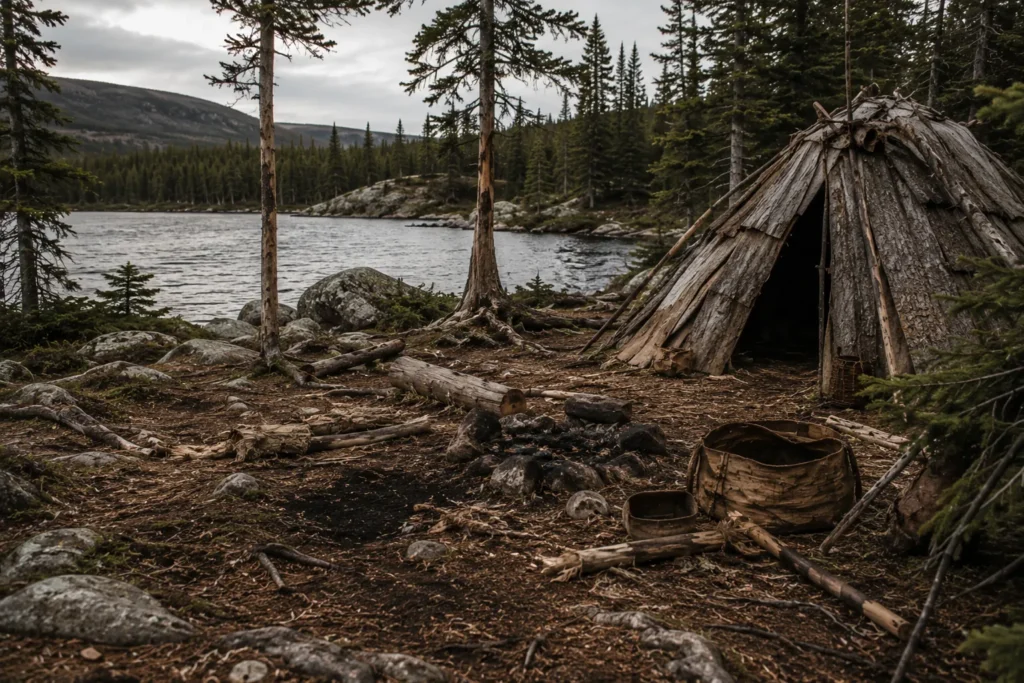
By then, fears were growing that only a handful of Beothuk remained alive.
That heartbreaking realization led to one of the most significant chapters in Newfoundland’s historical record.
In 1828, Cormack met Shanawdithit, widely recognized as the last known Beothuk woman. Living under his care for several months, she shared invaluable knowledge about her people, their customs, language, territory, family history, and the devastating encounters they had experienced with Europeans. Perhaps most importantly, she produced a remarkable series of drawings depicting Beothuk camps, tools, hunting practices, travel routes, and historical events—including the capture of her aunt, Demasduit. Those sketches remain among the most important firsthand records of Beothuk life ever created.
Without Shanawdithit’s memories, much of what historians know about the Beothuk would have been lost forever.
Without Cormack’s determination to record her knowledge, many of those priceless accounts might never have survived.
His work, however, cannot erase the tragedy that had already unfolded. Modern historians recognize that the disappearance of the Beothuk resulted from a complex combination of factors, including displacement from traditional coastal resources, introduced diseases, starvation, and violent conflict during European colonization. Cormack entered the story only during its final chapter. His efforts represented an earnest attempt to preserve knowledge and seek peaceful understanding, but they came when the Beothuk population had already been pushed to the edge of extinction.
Today, Cormack’s legacy remains both inspiring and sobering. His famous trek across Newfoundland stands as one of the island’s greatest exploration achievements, while his scientific observations continue to hold historical value. Yet his greatest contribution may be reminding future generations that exploration is not only about discovering places—it is also about recognizing the people whose stories deserve to be remembered.
Nearly two centuries after his remarkable journey, the forests, rivers, and barrens that Cormack crossed remain much as he described them. They continue to echo with the memory of a people who once travelled those same landscapes, and of an explorer who believed their story was worth saving.
Join the Conversation
Have you ever hiked part of William Eppes Cormack’s famous route or visited one of the historic sites connected to his remarkable journey? We’d love to hear your thoughts. Share your memories, family stories, photographs, or favourite places connected to Cormack, Shanawdithit, or Newfoundland’s interior in the comments below.
If you enjoyed this story, be sure to read more fascinating Newfoundland and Labrador stories here on ShareNL.ca.