Long after the Beothuk ceased to exist as a distinct cultural community in Newfoundland, one woman’s sketches ensured their story would not disappear with them.
On a quiet sheet of paper nearly two centuries ago, a woman picked up a pencil and began to draw.
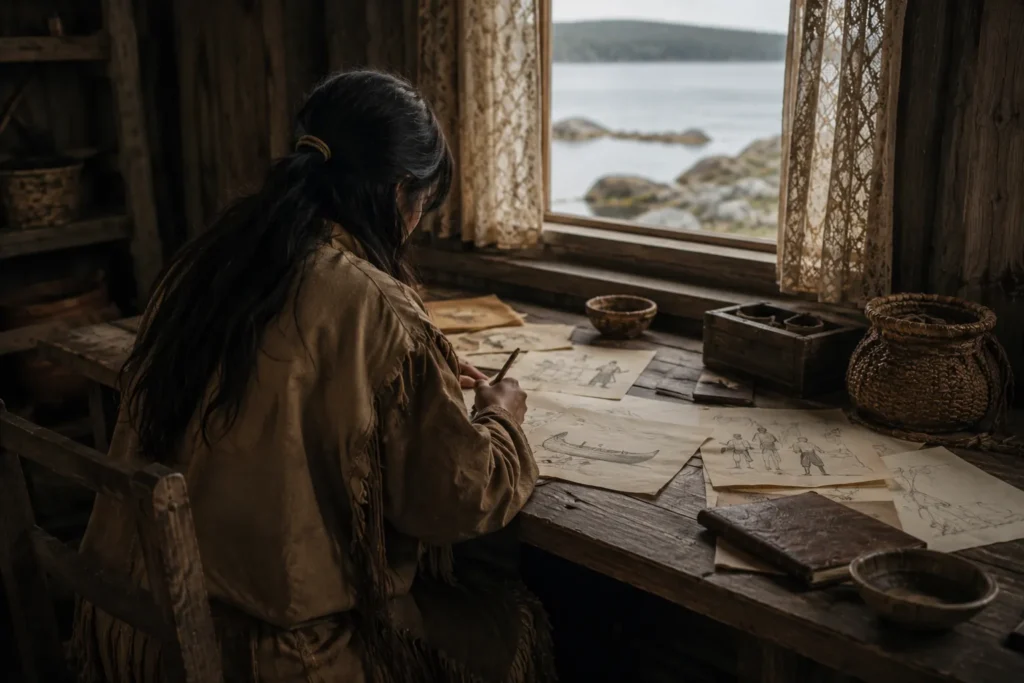
She sketched canoes gliding across inland waters, hunting tools carefully laid out, family camps tucked beside the forests, and encounters that had forever changed the course of her people’s history. They were simple drawings, created without ceremony or expectation. Yet today they are among the most important historical records ever produced in Newfoundland and Labrador.
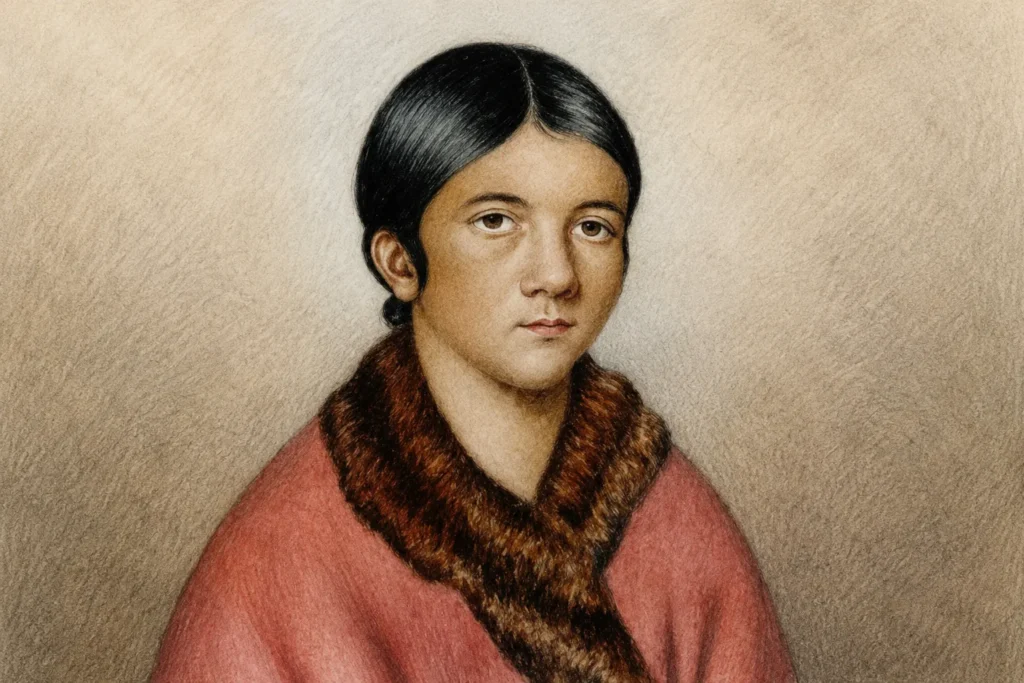
That woman was Shanawdithit.
Although history widely remembers her as the last known Beothuk, that description tells only part of her story. More importantly, she became the final known eyewitness able to describe the traditions, language, landscapes, and experiences of a people whose presence on the island stretched back centuries. Through her memory—and her remarkable sketches—the Beothuk left behind something priceless: one of the closest surviving records of their own voice.
For generations, the Beothuk lived throughout much of Newfoundland, travelling seasonally between the coast and the island’s interior. They hunted caribou, fished salmon, gathered berries, and built a way of life closely connected to the land. Red ochre, used to colour their bodies, clothing, tools, and canoes, became such a defining feature that European visitors referred to them as the “Red Indians” of Newfoundland—a colonial description rather than a name the Beothuk used for themselves.
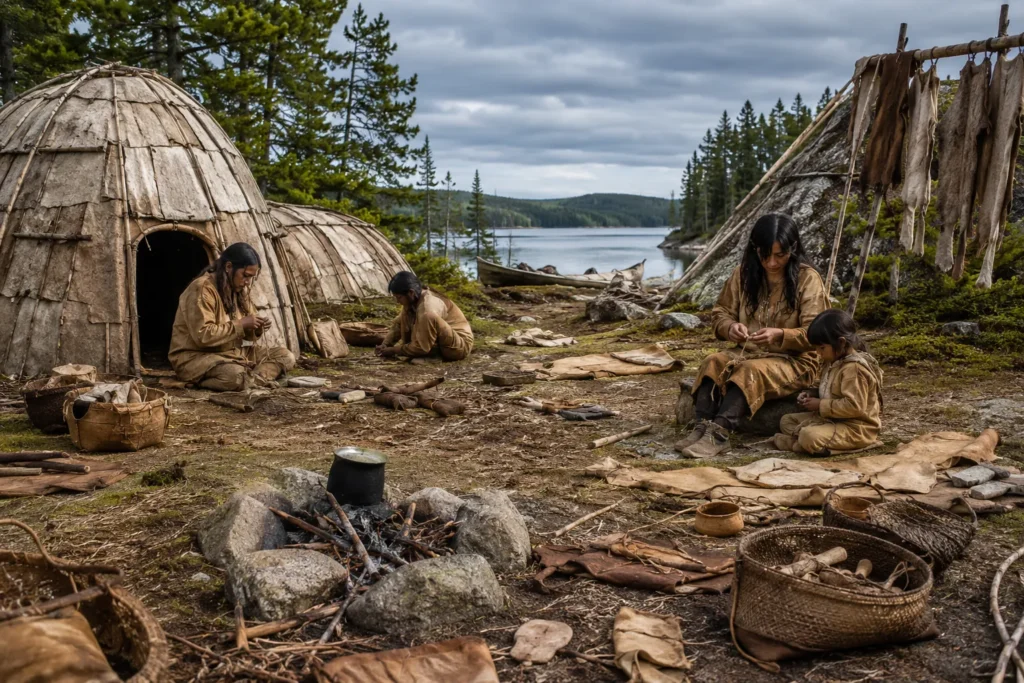
As European settlement expanded during the eighteenth and early nineteenth centuries, that world changed dramatically. Competition for resources, the loss of access to traditional coastal hunting grounds, violent encounters, starvation, and diseases introduced from Europe combined to devastate an already small population. By the early nineteenth century, only a handful of Beothuk are believed to have remained.
Shanawdithit was born around 1801 into this increasingly fragile world.
As a young woman, she witnessed tragedies few people could imagine. Her aunt, Demasduit, was captured by a party of settlers led by John Peyton Jr. at Red Indian Lake in 1819 during one of the most significant encounters between the Beothuk and European settlers. During the struggle, Demasduit’s husband, Nonosabasut, was killed while attempting to rescue her. Although Demasduit later died of tuberculosis before she could return to her people, her capture became one of the defining events in the final years of Beothuk history and deeply affected Shanawdithit and the small number of survivors who remained.
Four years later, in 1823, Shanawdithit, her mother, and her sister, exhausted by starvation, approached European settlers near Badger Bay in search of food. They were taken into colonial custody and later released with provisions. However, the family returned in poor health, and both her mother and sister died soon afterward from illness and the hardships they had endured, leaving Shanawdithit alone.
For the next several years, Shanawdithit lived in the household of John Peyton Jr. at Exploits, where she gradually learned enough English to communicate with those around her. In 1828, Scottish explorer and businessman William Eppes Cormack invited her to St. John’s to assist the recently formed Beothick Institution in documenting what remained of Beothuk culture. During the final months of her life, she created the drawings that would define her legacy.
They were far more than illustrations.
Some recorded traditional Beothuk tools, clothing, shelters, and hunting practices. Others mapped rivers, lakes, and travel routes familiar to her people. Several depicted historical events she had witnessed or learned firsthand, including the capture of Demasduit and encounters between the Beothuk and European settlers.
As Shanawdithit explained each image, Cormack carefully recorded her descriptions, preserving valuable details about Beothuk language, customs, place names, and daily life. Together, her drawings and recorded explanations created one of the closest surviving accounts of Beothuk society from someone who had lived within it.
Among the events Shanawdithit chose to preserve was the capture of her aunt, Demasduit—a tragedy that became one of the best-documented episodes in the final years of the Beothuk. By recording that painful memory on paper, Shanawdithit ensured that one of her people’s darkest chapters would not be forgotten.
Today, historians regard these drawings as extraordinary. Without them, much of what is known about the final generations of the Beothuk would have been lost forever. They remain an irreplaceable resource for researchers studying Indigenous history in Newfoundland and Labrador and continue to be preserved through archives and museum collections.
Shanawdithit died of tuberculosis in St. John’s on June 6, 1829, at about twenty-eight years of age. She never returned to her homeland. Yet her influence only grew after her death. On November 15, 2000, both she and her aunt Demasduit were designated National Historic Persons of Canada in recognition of their extraordinary contribution to preserving the history of the Beothuk.
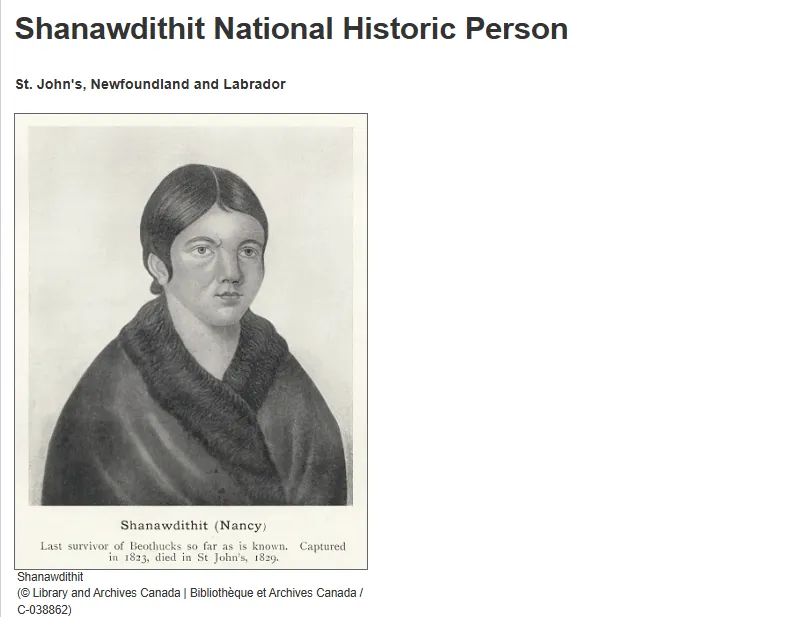
Her story also continues to evolve. While Shanawdithit is widely remembered as the last known Beothuk, many historians note that her death marked the end of the Beothuk as a distinct recorded cultural community rather than proving that every person of Beothuk ancestry had disappeared. Some oral histories and modern scholarship suggest that individuals with Beothuk ancestry may have survived by joining other Indigenous communities. As a result, historians today often describe her as the last known Beothuk rather than the last Beothuk without qualification.
Modern scholarship also reminds us that Shanawdithit’s drawings should not simply be viewed as historical curiosities. They are the testimony of a survivor who ensured that her people’s memories would endure, even when so much else had been lost.
Across Newfoundland and Labrador today, visitors can encounter her legacy in museums, archives, monuments, and classrooms. Her sketches remain instantly recognizable—not because they are elaborate works of art, but because they carry something far more powerful. They were created by someone who had lived the history she recorded.
There are few voices from Newfoundland’s earliest Indigenous history that reach us so directly across time.
Shanawdithit’s is one of them.
And thanks to her quiet determination to remember, generations of Newfoundlanders and Labradorians can still glimpse the world of the Beothuk through the eyes of someone who called it home.
Join the Conversation
Have you ever visited the Beothuk Interpretation Centre at Boyd’s Cove or viewed Shanawdithit’s remarkable drawings in a museum or archive? What are your thoughts on how Newfoundland and Labrador remembers the Beothuk today?
Share your memories, family stories, or photographs in the comments below—we’d love to hear from you.
If you enjoyed this story, be sure to read more fascinating Newfoundland and Labrador stories here on ShareNL.ca.