Where History, Folklore, and Memory Meet Above St. John’s Harbour
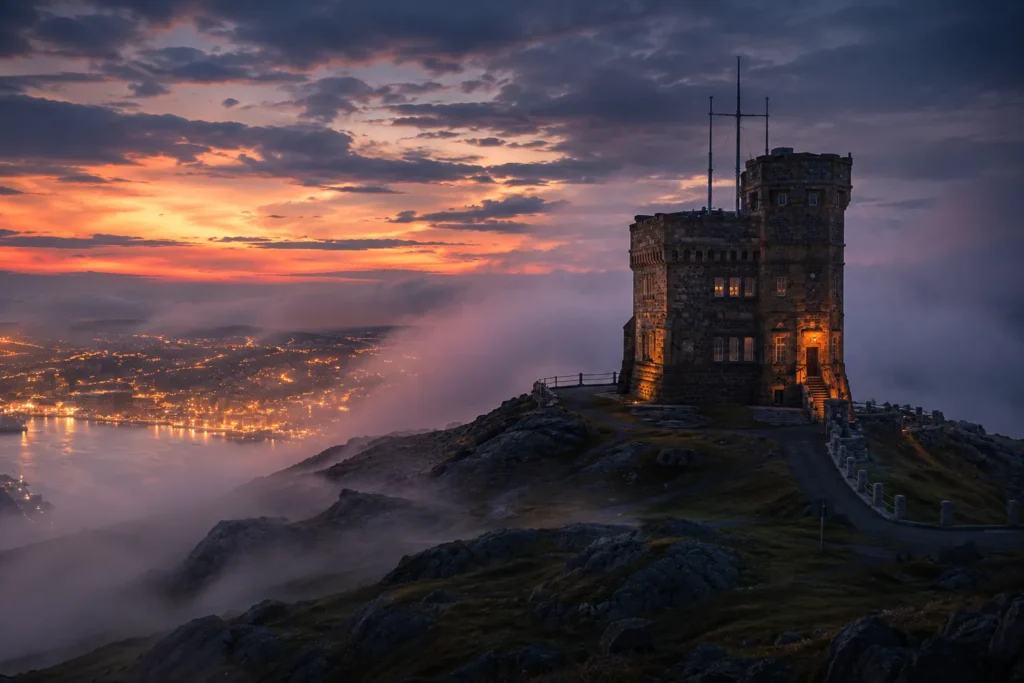
A bank of Atlantic fog drifts across the cliffs as evening settles over Signal Hill. The wind whistles around the stone walls of Cabot Tower, carrying the cries of gulls high above St. John’s Harbour. Below, the city lights begin to sparkle across the water while waves crash against the rugged coastline that has guarded this harbour for centuries.
As the last visitors make their way down the trails, the hill grows remarkably quiet.
It is easy to understand why Signal Hill has inspired generations of stories. Few places in Newfoundland and Labrador combine such dramatic scenery with so much history. Soldiers once stood watch here, signalmen scanned the horizon for distant sails, and families anxiously waited for ships carrying fathers, sons, and loved ones home from the sea.
Today, Signal Hill is celebrated as one of Canada’s most important National Historic Sites. Yet alongside its well-documented military and communications history lives another tradition—one passed from generation to generation through local storytelling rather than official records.
Here, history and folklore often stand side by side.
A Hill That Watched History Unfold
For more than three centuries, Signal Hill has overlooked the only entrance into St. John’s Harbour. Its commanding position made it one of the colony’s most important defensive locations.
Fortifications were established around the harbour as early as the seventeenth century, and the hill played a decisive role during the Battle of Signal Hill in September 1762. British forces under Lieutenant-Colonel William Amherst captured the heights overlooking the harbour, gaining the advantage that ultimately led to the recapture of St. John’s from French forces.
Long after the cannons fell silent, Signal Hill remained an important military post. It later became internationally famous in 1901 when Guglielmo Marconi received the world’s first transatlantic wireless signal near Cabot Tower.
Few places in Newfoundland and Labrador have witnessed so many defining moments in the province’s history.
Gibbet Hill and the Origins of a Dark Legend
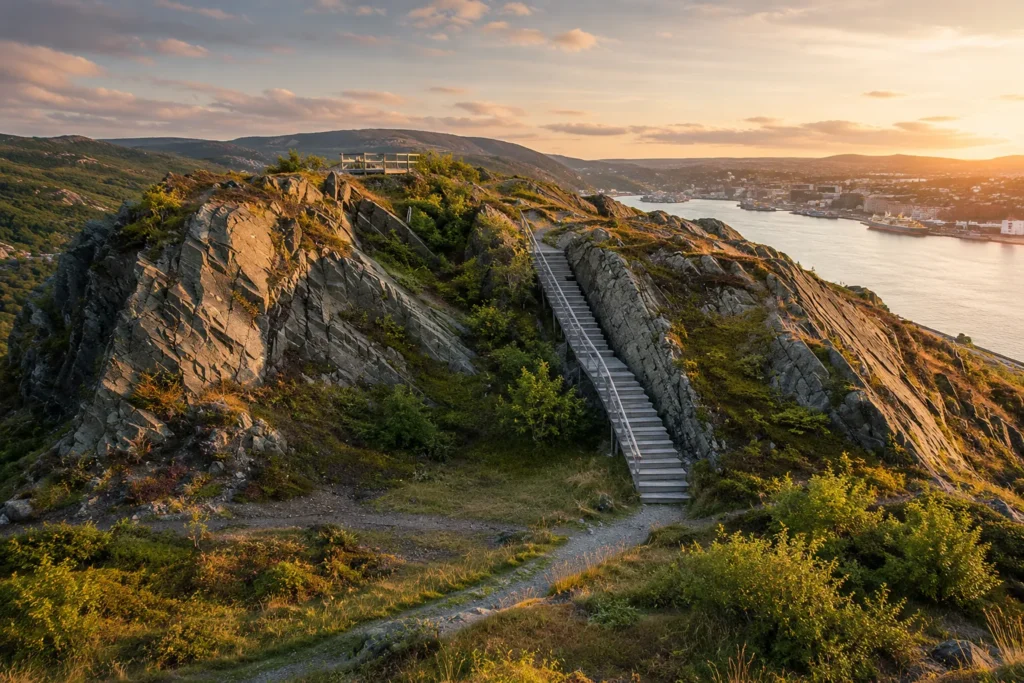
Among Signal Hill’s many historic features is Gibbet Hill, where executed criminals were publicly displayed during the eighteenth century as a warning to others. Parks Canada documents the existence of the gibbet, making this one of the hill’s darker but well-established historical facts.
What happened afterward, however, belongs to folklore.
One long-standing local legend claims that the bodies of those executed were later placed in barrels, weighted with stones, and rolled into nearby Deadman’s Pond. Another version suggests the pond was bottomless—a gateway to hell itself.
No reliable historical evidence has been found to support these stories.
Professional Newfoundland folklorists, including Dale Jarvis, identify them as examples of local oral tradition rather than documented history. Even the famous “bottomless pond” legend has been tested in modern times and found to be just that—a legend.
Yet like many Newfoundland stories, its survival says as much about the imagination of the people as it does about the landscape itself.
Deadman’s Pond and a Real Tragedy
Although many tales surrounding Deadman’s Pond belong to folklore, one heartbreaking event is firmly documented.
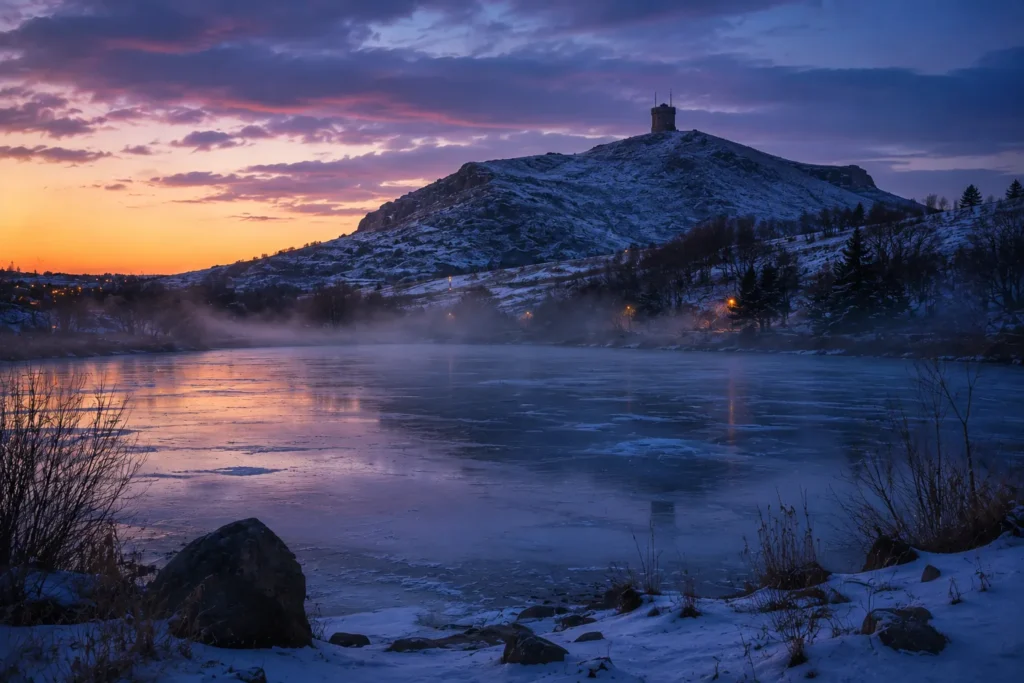
On Boxing Day in 1869, Frederick Weston Carter—a young lawyer and volunteer officer—attempted to rescue two girls, remembered in historical records by the surnames Bruin and Martin, after they broke through the ice while skating on the pond.
Despite his courage, all three drowned.
The tragedy deeply affected the people of St. John’s. Carter was later honoured with a public memorial recognizing his selfless attempt to save the children.
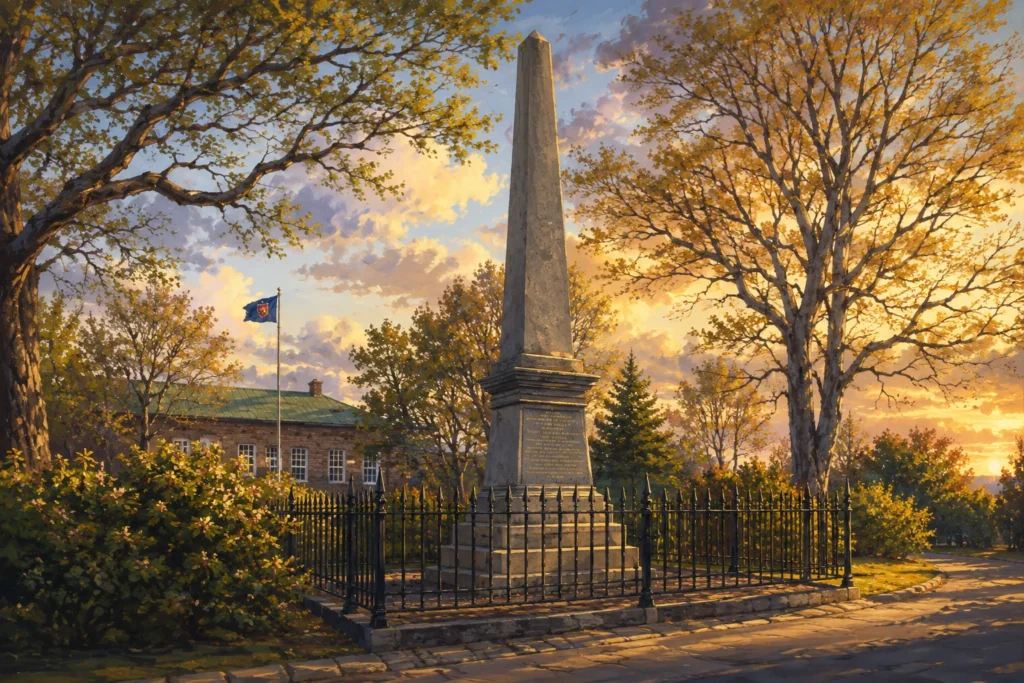
Over time, the pond’s existing reputation for mystery became intertwined with this tragic event. In some modern retellings, the story has taken on supernatural overtones.
Historical records confirm the tragedy itself.
They do not confirm reports of ghosts, mysterious cries, or apparitions.
Those stories remain part of modern folklore rather than documented history.
Ladies’ Lookout: Waiting for Home
Not every legend connected with Signal Hill is a ghost story.
One of its best-known traditions centres on Ladies’ Lookout, where, according to local legend recorded by Parks Canada, women climbed the hill to watch for ships carrying husbands, fathers, sons, and sweethearts safely home through the Narrows.
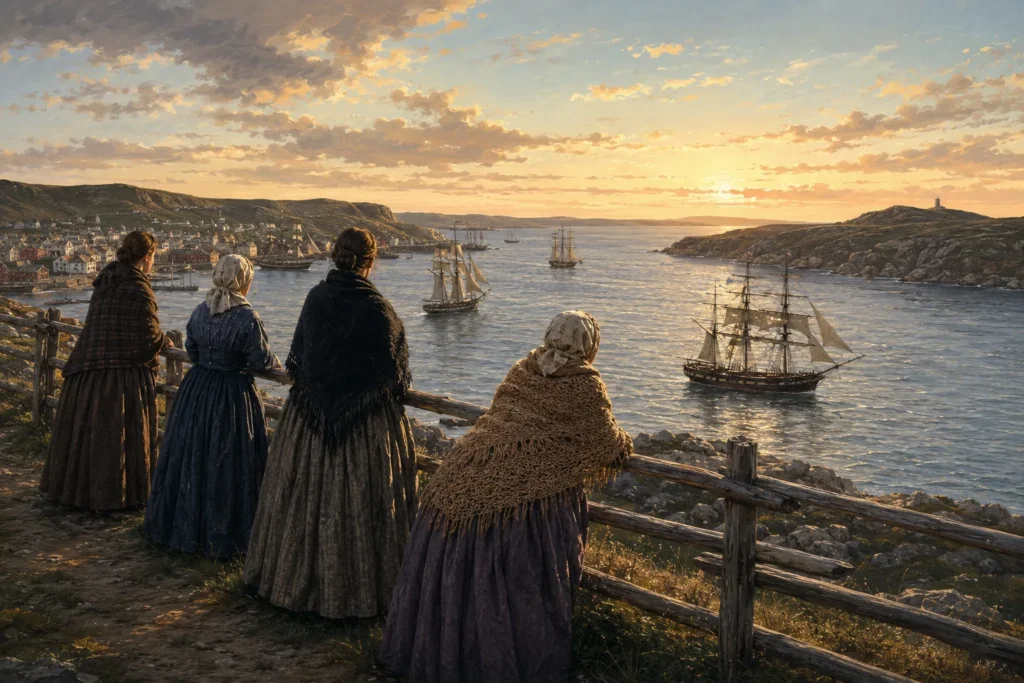
Whether every detail can be historically verified matters less than what the story represents.
For generations of Newfoundlanders, life was shaped by the sea. Fishing voyages, military service, sealing expeditions, and overseas travel often separated families for months at a time. Every sail appearing on the horizon brought hope—or heartbreak.
Standing at the lookout today, it is easy to imagine the quiet anticipation that once filled this remarkable place.
Why Signal Hill Inspires So Many Stories
Unlike many places promoted as haunted destinations, Signal Hill’s official interpretation focuses on its military, communications, archaeological, and cultural history.
The historical sources consulted for this article do not document verified paranormal activity on Signal Hill.
Instead, its supernatural reputation has grown naturally through local storytelling, folklore collections, guided ghost walks, and generations of residents sharing tales with family and friends.
Perhaps that is exactly why these stories continue to endure.
The sweeping fog, abandoned batteries, steep cliffs, hidden valleys, and centuries of human experience create a setting where imagination comes easily.
Signal Hill does not need proven ghosts to feel mysterious.
Its history provides more than enough.
Where History Meets Imagination
Whether you visit to climb Cabot Tower, watch the firing of the Noon Day Gun, hike the North Head Trail, or simply admire one of Canada’s most spectacular views, Signal Hill offers something beyond scenery.
It offers perspective.
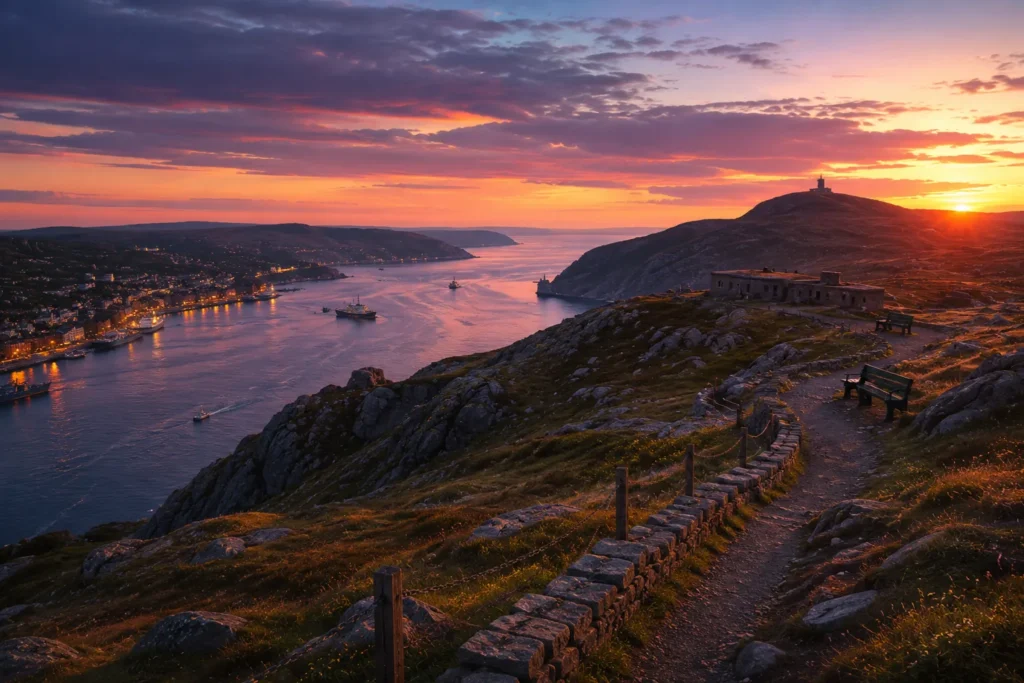
Every generation has left its mark here—soldiers, sailors, inventors, immigrants, families, and storytellers.
Some left official records preserved in archives.
Others left only stories passed from one generation to the next.
Neither should be forgotten.
For while history tells us what happened, folklore reminds us how people remembered it.
Together, they make Signal Hill one of Newfoundland and Labrador’s most fascinating places to explore.
Why It Matters Today
Signal Hill continues to symbolize Newfoundland and Labrador’s resilience, ingenuity, and deep connection to the Atlantic. Visitors come for its spectacular views, military history, and the birthplace of one of the world’s greatest communications achievements, but they also encounter something less tangible: the stories that generations have shared about this remarkable landscape. Whether rooted in documented events or shaped by local folklore, these tales encourage us to see history as something that lives not only in archives and monuments, but also in family memories, community traditions, and conversations passed from one generation to the next. That enduring blend of history and storytelling is part of what makes Signal Hill unforgettable.
Share Your Story
Have you ever visited Signal Hill after sunset, walked past Deadman’s Pond, or heard one of the old stories connected with Gibbet Hill or Ladies’ Lookout?
We’d love to hear your memories, family stories, local traditions, or photographs in the comments below.
History lives through the stories we share.
If you enjoyed this story, be sure to read more fascinating Newfoundland and Labrador stories here on ShareNL.ca.